Wednesday, December 16, 2015

On Dressing Up

Jennifer Riches Photography

When I was little, my sister Adrianna and I would gigglingly sneak into our parents' closet to try on our mother's clothes. The closet was big enough that it was the kind of place more generous Dursleys would have given Harry Potter for a bedroom, the kind of place you could huddle in for hours and never be found. When I was by myself in my parents' drafty bedroom, watching NBC Nightly News with Brian Williams or Seinfeld re-runs at 10 PM, I compulsively closed that closet door--something about its gaping dark scared me a little, sitting on the couch in the cold.

But in the daytime, with Adrianna beside me and the lights on, the place was a museum of wonders. There were the big heavy sweaters that came down to our knees, relics of colder places. Maxi-skirts that made our little frames look like we were drowning in the fabric that pooled at our feet. Spare pillows and sheets we stuffed in our shirts so we could waddle around, laugh at our newfound girth, and declare ourselves "sumo wrestlers."

And the crown jewel of the closet: my mother's pale pink wedding dress with leg-o'-mutton sleeves, thin veil, and delicate lace gloves. It was folded up neatly in one of those clear plastic zip-up cases, the kinds bedsheets and comforters are sold in, and we eagerly unzipped the case and dug our hands into the gleaming satiny fabric as it spilled out like froth from a can.

I don't even remember how many times we played dress-up, how many times we played hide-and-seek in the thicket of clothes until our mom found us, how many times I longed for the day I would be tall and engaged enough to wear that pale pink wedding dress. There was something so alluring about all the costumes we put on, big as they were on our ungainly small selves. Maybe that allure was in the futures they represented--days and nights of solemnity or glamour that we, at six and eight years old, had never known.

One day my mom bought a makeup set from a garage sale. It was like new, sparkling eyeshadows and blush and lipsticks attractively packaged inside a sleek black case that read "Bon Marché" on the front. The French sound of the now-defunct brand made the makeup seem even fancier and more mystic; I loved the sound of snapping it open and shut, doing it again and again. Adrianna and I added makeup to dressing up, rouging our cheeks and painting our eyelids until our faces looked like cheeky kabuki masks.

All this time, we had a saying, my sister and I: in a singsong voice, she would say to me, "I'm pretty and you're cute," and I would obediently respond, "I'm cute and you're pretty." The distinction meant little to me as a small child, but when I got to be eight or nine I started realizing that "pretty" meant my sister's thinner face and long hair. "Cute" meant my chubby cheeks and bowl cut. We stopped playing dress-up and putting on makeup when Adrianna started wearing makeup seriously, not for fun. When we'd put it on in our mom's mirror with what we'd scrounged from her Bon Marché kit, we knew we looked silly. We caricatured adulthood. Now, she tried to replicate it more perfectly.

In the hurt of rejection--it felt like my big sister was leaving me behind--I tried to distance myself from everything that Adrianna did. If she was going to be pretty, I would try for the fashion sense of a 13th-century hermit. (Once, I stole my dad's green wool sweater, wore it with a belt, called it my "tunic," carried around a butter knife as my "sword," and imagined that I was a knight.) If Adrianna was going to buy and wear makeup, I would avoid it religiously. (To this day, I have no idea how to use anything but lip gloss.)

It's funny to me, how puritanical I was. I disguised my undiscriminating opposition to everything that my sister did as simply being principle. My principles were simple. Aesthetic decisions were shallow, the choice to look "attractive" was unapologetically sexual, and sexuality was for someone else. I'm not sure where I got that idea--maybe it was all the Teen Vogue and Girls' Life magazines with cover headlines like "12 Things You Do That Guys Secretly Love" and celebrities posing like experts in the Male Gaze, images that nailed into my mind the idea that beauty and sex and giving up some sense of self were all intertwined. I didn't want to be a pretty girl, I wanted to be my own girl.

As I grew older, those puritanical opinions moderated and eventually I shed them altogether--mostly, though, because I started having crushes (like this one). I used Chrome's Incognito mode to read Wikihow articles about how to flirt. I sometimes flipped through the shiny pages in Vogue and Harper's magazines at the airport and wished for actresses' made-up faces. I still didn't brush foundation onto my face or paint color onto my lips, and there were days I went to school without brushing my hair, but gradually I began to understand the idea that you would want to be attractive.

Part of it still felt like a betrayal of principle, though. I've been a feminist for as long as I can remember, and the idea that some accident of birth fated me to spend more time thinking about the color of my lips or the length of my lashes than any of my guy friends irked me. I watched talks like journalist Tracey Spicer's "The lady stripped bare" at TEDxSouthBankWomen that exhorted women to waste less time on appearances, and read books like Toxic Beauty: How Cosmetics and Personal-Care Products Endanger Your Health...and What You Can Do About It that centered on the negative health ramifications of makeup. So it surprised me a little when I took my sister's side one night, in an argument with my mom.

Wearing makeup, my mom said, was anti-feminist. How could my sister call herself a feminist?

I replied that trying to regulate the personal choices of women would be the real anti-feminist thing to do.

My mom looked unconvinced and I figured that the argument would surface again some other time. And it did. We were watching Saturday Night Live and my mom caught sight of musical guest Nicki Minaj in a very tight, very neon color-blocked dress. There was a deep V, almost down to her stomach, and the hem of the dress hit upper thigh.

"Why would you wear something like that?" my mom asked.

"Uhhh...because you want to?"

"Why draw attention to yourself that way?" she persisted.

I protested that the language of women "drawing attention" to themselves when they choose to wear revealing clothing is embedded in patriarchal norms that see women as culpable in their own objectification, with ultimately disastrous consequences--everything from middle school girls being subjected to sexist and unequal dress codes because they'll "distract" boys, to rape survivors being told they were "asking for it." Nicki Minaj should be able to wear whatever she wants: it's our choice to look, or look away.

I said all of the above in a very fast voice.

My mom looked at me skeptically. "Some people definitely do "dress up for boys.""

No shit, I thought. You're saying 'some people' like I've never done that. But it's also well-documented that women dress up more for other women. It's incredibly heteronormative to assume that, when a woman is dressed in a revealing way, that it's only for men's benefit. I think people, regardless of their gender identity or sexual orientation, tend to appreciate beauty (or hotness, or sexiness). Ultimately, regardless of who will see them or where they're going, sometimes some people just enjoy dressing up. They may feel a sense of aesthetic empowerment related to their own evaluation of how they look, not what anyone else thinks of them.

I used to think that there was shame associated with wanting to look a certain way. I don't think that way any more. It's only when people feel that most or all their power is drawn from aesthetics--especially when women feel this more than men--that we have a major problem. To combat this, amazing young women have launched petitions to get magazines like Teen Vogue to stop Photoshopping their models. The company Aerie launched a campaign called "#AerieReal" featuring photographs that hadn't been retouched. Celebrities young and old have posted Instagram shots sans makeup. Any and all efforts to celebrate beauty in all its forms, to emphasize that you don't need makeup or Photoshop to look wonderful, are a welcome departure from the typical "you aren't good enough" media message bombarding young girls.

When I was younger and I dressed like a hermit, on some level it was because I had resigned myself to that idea: I wasn't good enough. That there was no hope for me to be pretty, so why even try? And at some point in early teenagehood--thirteen or fourteen--that switch just flipped. Yes, maybe it started with boys telling me I was pretty, and yes, maybe it started with dressing up for them too. But at some point I realized two things: your beauty doesn't have to be for sexuality, and your sexuality doesn't have to be for other people.

Ask me if dressing up and wearing makeup is anti-feminist, and I'll remember posing and picture-taking with one of my roommates in freshman year. We'd try on dresses like runway models and wear finery to dinner for no reason. Once we posed in our sports bras after a run, flexing our arms for "gym selfie"-type photos and sending each other sultry Snapchats. Say we did it for each other, sure, but on some level we also did it for ourselves.

Ask me if dressing up and wearing makeup is anti-feminist and I'll remember playing dress-up in my parents' closet with my sister. Were we anti-feminist, then, at six and eight? Did we set women back, by delighting in pretty things, painting our faces and falling giggling into heaps of clothes? I don't think we did it then.

And I don't think we do it now.
Saturday, December 12, 2015

Just Desserts


It's that season again, for jingling, holiday cards, and early decision and early action college acceptance decisions. Anyone with Facebook friends who are high school seniors may have seen by now those Facebook posts in all caps: "[NAME OF SCHOOL] CLASS OF 2020!!!" "GOT INTO [NAME OF SCHOOL]!" or, for the spectacularly high-achieving students who applied to multiple non-restrictive early action schools, "[NAME OF SCHOOL], [NAME OF SCHOOL], [NAME OF SCHOOL]!" This will be my last year seeing a large crop of those posts, since I didn't know too many people more than two grades below me in high school. It made me think about what this time meant for me, back when I was a senior.

It has now been exactly two years since I received my own Early Action admissions decision. Senior year was going swimmingly. I was co-president of the speech and debate team with my best friend, and that December day in 2013 our whole team was at a tournament at another high school. We gathered around our table in a noisy cafeteria that smelled like movie-theater popcorn. While my teammates avidly read over their evidence files, I refreshed Gmail on my phone again and again.

Finally, the email I was looking for.

My heart seized a little. I pressed it and blinked my eyes shut, hardly daring to open them again and look. And then, in front of the whole debate team, I read this:

Dear Adora,

I am very sorry to let you know that we are unable to offer you admission to Stanford University.

It felt like a gut punch.

Even though I had known it was a long shot, even though I was barely even sure if I really wanted to go there, even though I'd heard so many remarks like "College admissions is just a crapshoot" indicating the link between merit and admission was tenuous at best, it didn't change the reality: that "unable to offer you admission" felt like some kind of declaration of You just aren't good enough, Adora.

The latest deluge of joyful college acceptance posts reminded me of that day, and the whole college admissions process in general. How, after the Stanford rejection, I applied to 13 other schools because my admission that I hadn't been good enough for them made me worry I wouldn't get in anywhere. How I messaged friends to ask them if they'd gotten in to the schools we'd both applied to, and when they said no, I felt better, as though I hadn't wanted them to succeed.

The whole thing made me question a lot, including our definitions of "merit" (as you can read in this blog post) but also the idea of "deserving" things. My friend and fellow Cal Bear Giovanni put it really well in this Facebook post:

"**edit: hella important to mention that these realizations are based not only in my experiences as a low income student (no college counselor, being told at orientation that low income students only get into college bc of affirmative action/ 'don't deserve to be here,' etc.), but MORE IMPORTANTLY the theoretical/political criticisms articulated mainly by PoC (esp. underrepresented folks) that gave me the language to produce the following: I've been reflecting a bit on the the college admissions process after seeing a couple of my friends recently get accepted into their first choice colleges via early decision.
The biggest mistake I made in applying to college was taking myself seriously: believing the folks who told me I deserved to go to certain schools.
If I could go back and change one thing about how I went through the process, knowing what I know now, I wouldn't invest the kind of emotional energy I did. College acceptances are, especially for folks like me, simply a measure of our privilege rather than our worth as people. It's not, and never has been, about how "worthy," "deserving," or "hard working" we are. The responses I got from the schools I applied to were indicative of the privileges afforded to me--having my education financially and otherwise invested in since pre-K, being groomed to believe my opinions/my presence/facets of my identity matter, having a teacher who used to work in admissions at Oberlin read over most of my personal statements, being exposed to financial and mental health resources that helped support me (s/o to Questbridge and the fab core teachers + corebabies who stuck it out for me), etc.--nothing more, nothing less."

That post made me think about how the way we think about college admissions is reflective of a larger problem endemic to our culture: the idea that we deserve our rewards, admissions, high incomes, and successes because of our merit, hard work, intellect, or virtue. 

I disagree, even if it's an unpopular stance to take. President Obama got into hot water in 2012 for expressing this in a campaign stump speech:
"If you were successful, somebody along the line gave you some help. There was a great teacher somewhere in your life. Somebody helped to create this unbelievable American system that we have that allowed you to thrive. Somebody invested in roads and bridges. If you've got a business—you didn't build that. Somebody else made that happen."
I agree with the President. None of our successes happen in vacuums. The seemingly bright and hopeful message of saying that people who are lucky are lucky because they deserve it has an equally dark implication: that those who are less fortunate, whose lives are dealt blows day in and day out, are somehow lazy, unintelligent, unambitious, or immoral.

I do not believe in a fate so just that it deals the fortunes you "deserve."

Which misfortunes do we call injustices? Which do we assume are some kind of punishment for deficits in character? Take, for example, poverty. There's a Bible line (Luke 6:20), "Blessed be ye poor: for yours is the kingdom of God." I bring it up not out of any personal belief but because of irony: the party that most loudly and frequently proclaims its Christianity has, from the 1980s onward, associated being poor with laziness or depravity. The Reagan administration famously disparaged "welfare queens" who fraudulently cashed in on government largesse, vilifying welfare programs for incentivizing laziness or bearing children out of wedlock. "[Reagan's] welfare queen soon became deeply ingrained in American culture. She was black, decked out in furs, and driving her Cadillac to the welfare office to pick up her check. None of these stereotypes even came close to reflecting reality, particularly in regard to race," write Kathryn J. Edin and H. Luke Schaefer in $2.00 a Day: Living on Almost Nothing in America. Yet this persistent stereotype, and the idea that people just had to work harder not to be poor, justified spending cuts on welfare programs for families in poverty.

Many people living below the poverty line in America work incredibly hard, harder and longer hours than the CEOs making hundreds of times their wages. They often work in suboptimal conditions and for low wages.

But this, ultimately, is beyond the point: the idea that some people "deserve" to be poor, if they don't work that hard, is reprehensible. That's like telling women that we "deserve" to be catcalled on the street if we don't cover ourselves from head to toe, or telling immigrants that they "deserve" to be subjected to offensive comments if they don't speak English without an accent. It's blaming an individual for a larger problem (sexism, xenophobia), instead of trying to carve the rot of inequality away from the societal structure itself.

The denial of help to people in need, in the name of a holier-than-thou this is what you deserve, only further entraps people in poverty--denying equality of opportunity to generation after generation. It's a mistake to associate "freedom" and "opportunity" with how rich our top earners can get; the lowest level of rights we accord to people is far more reflective of the morality of our society than the heights to which we allow people to rise.

Recall Giovanni's line "College acceptances are, especially for folks like me, simply a measure of our privilege rather than our worth as people." You can replace the phrase "college acceptances" with just about anything--ZIP codes, incomes, high-powered careers--and that sentence will hold true. As my friend Kelly pointed out, you working hard does not negate the existence of privilege, adding that "being privileged just means that you don't have to work as hard as someone else with less privilege than you [to get to the same point]."

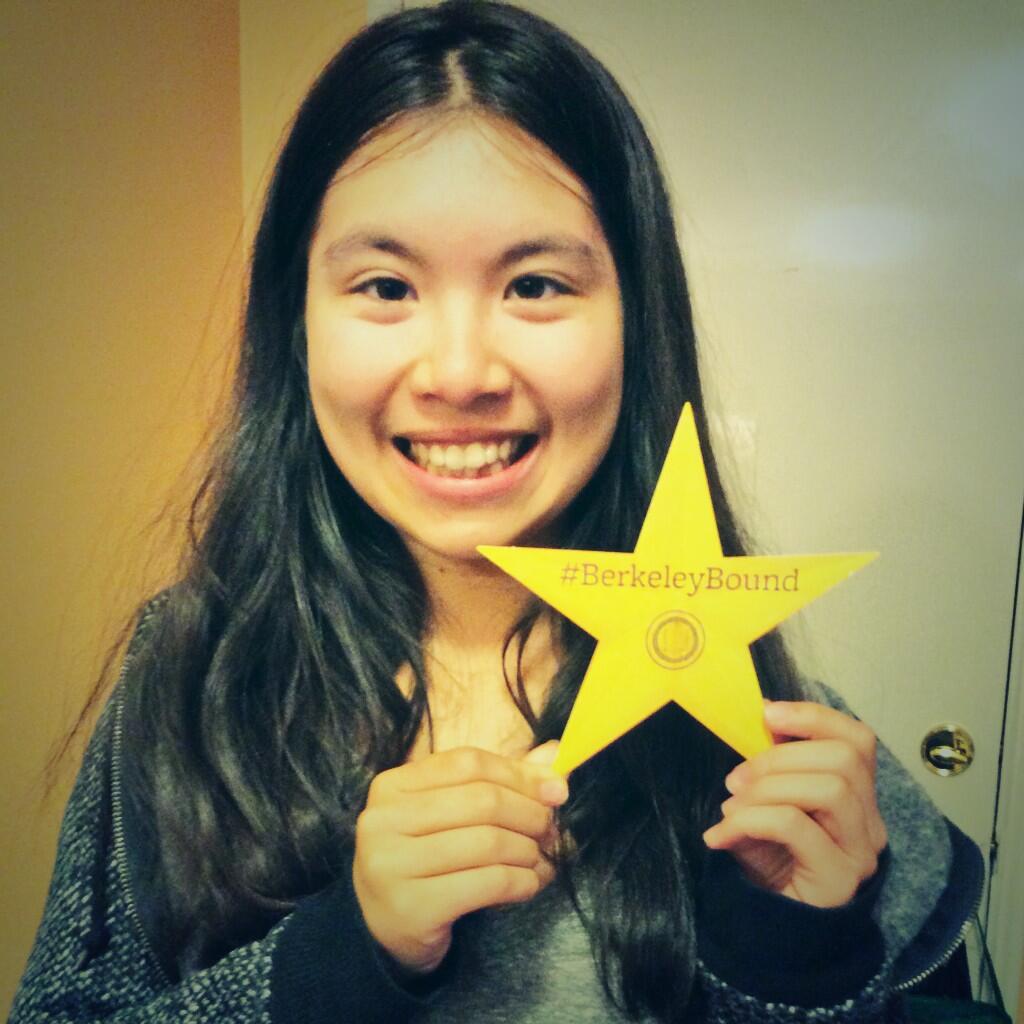
Just like the many opportunities I've been afforded in my life, I did not "deserve" the star in my hand saying #BerkeleyBound. It could have just as easily gone to any of my friends, and a Yes or No from a school is a statement of fact--"We are offering you admission," not a judgment on who you are.

One day I was practicing layups in my basketball PE class and overheard a classmate say, in some forgotten context, "We're smart, we're all at Berkeley right?"

I wanted badly to interject, to say "Lucky, all. And some of us had parents who read to us from the womb and teachers who supported our dreams and SAT prep classes and former Olympians for sports coaches. But please never say that we are all smart, or good, or curious, simply because of the accident of fate that landed us here."

But as one does in PE, I kept my mouth shut and my eyes on the ball.

Thursday, December 10, 2015

Arthur Dunn

Paris Street, Rainy Day by Gustave Caillebotte

Names have been changed for privacy.

September 2011. My very first day of tenth grade. I'm young and new, and the way I clutch a class schedule in my hand reminds me of the intense grip people usually reserve for grabbing hold of ropes thrown down from rescue helicopters. Honestly, the schedule feels like my rope, though whether it leads to safety or danger I don’t know. Walking through the hallways, feeling increasingly diminutive compared to everyone around me, I feel inclined toward the latter.

It isn’t helped by the fact that I’m deep in my awkward stage. I put equally minimal effort into showering and fashion, wearing the same clothes most every day of the week. Pro tip to my lazier friends: you can get away with wearing the same clothes everyday...if it’s the right kind of clothing. North Face jacket plus jeans? Solid. My linty, knee-length, zip-up coat that seemed to act as Redmond High School’s duster, based solely on the sheer amount of detritus it collected? Hell no. Add to this my unbrushed hair, windswept by fierce breezes on my mile-long walk to school, chapped lips (I was opposed to chapstick on principle, since I thought it counted as makeup, which was for people of ill repute and my sister), and glasses, always smudged and falling ever so slightly down the bridge of my nose. 

Point is, thirteen-year-old Adora Svitak was not exactly a studmuffin.

But people are polite at RHS, so no one says a word. 

My first class is AP Art History. It's usually reserved for juniors and seniors only, so I'm not only young age-wise, but grade-wise, compared to almost everyone else in the class. When I walk in--late--twenty pairs of eyes sweep toward me with inscrutable expressions. I quickly stumble to the closest possible chair.

“You’ll need to come with me, we’re checking out textbooks,” the teacher, Ms. C, says kindly. I follow her quickly out through the hall and down a staircase until we get to the long line for checking out textbooks. Everyone else has their school ID out and I realize with a sinking feeling that mine is languishing in a dark corner of my backpack, all the way back in the AP Art History classroom. 

“I’m so sorry, I forgot my ID!” I blurt out quickly, and run back up the stairs. It takes me a couple minutes to retrace my steps and find the classroom, and when I walk in I get some odd glances before people look away. There’s no mirror for me to check if I’m blushing, but my cheeks feel warm as I fumble around in my backpack for my ID. It’s only the first day and yet I’m already late, and I—

“Forgot school ID?” one guy asks jovially. He sets his backpack and art history textbook down on the desk with a thump. I’m crouched on the ground by my backpack so I have to almost crane my neck up to see his face; he’s really really tall--6’1” at least, maybe 6’2”. He has a rumpled shock of mousy brown hair and rectangle glasses. In a class that seems to pull ethnically from every continent but Europe, his whiteness stands out. He’s really white is actually my first thought about him.

“Yeah,” I murmur, and he cracks me a smile. Saying "suddenly, the day doesn't feel nearly as bad" seems trite, like a paper-mache sun suddenly wheeling out from behind clouds on a Saturday morning PBS Kids show. But it's also true.

The whole class, I sit silently in a chair next to Tall White Guy, looking around and trying to understand the dynamics of the room. I feel as if everyone knows each other already; I’m the only person not sitting with people I’m intimately acquainted with. Tall White Guy is the class clown, interjecting with jokes that make some of the girls in the class shake their head and sigh in mock frustration as Ms. C looks on benevolently, mildly entertained. 

I don’t remember when I find out his name is Arthur, but I remember savoring it the first time I hear it. Arthur, I repeated in my head, ArthurArthurArthurArthurArthur until the syllables blend together into a meditative murmur like the gentle hum of a white noise machine. It takes a month for that gentle hum to speed up, into the rapid pulse I get when I slide into my chair next to him, when he makes a side comment to me during class, when he says some parting words--probably just “have a good weekend”--before we go our separate ways out the classroom door.

I am thirteen, and I call this love.

I write angsty entries in my journal trying to disown my feelings, applying a rational lens to the whole situation: I’m thirteen going on fourteen, he’s seventeen going on eighteen. I’m a sophomore, he’s a senior. We only talk in class; we have practically no mutual friends, no overlapping interests. He doesn’t even like art history. I’m a devout Democrat with ‘08 Hillary Clinton stickers on my laptop, and he’s a libertarian who jokingly runs a half-assed “campaign” (consisting of telling fellow seniors about it) as a write-in candidate to oppose Redmond’s mayor in the elections. I’m so infatuated that one night after I’ve pretended to go to bed I sneak into my parents’ room to steal their incompletely filled out mail-in ballots, quietly crouching on the hardwood floor to slip the ballots out and surreptitiously write in his name. I chicken out at the last minute and slink out with a profound feeling of disappointment in myself.

I see him the next day and think about saying, “I almost fraudulently voted for you,” but I don’t even open my mouth.

I have a tortured relationship with the idea of having a crush itself, knowing that it’s fruitless, only causing me the pain of feeling my heart rate accelerate and my face to dissolve into nervous giggles and easy smiles for his bad jokes, but at the same time it’s my first time feeling something this intense, and my infatuation for him is half infatuation for feeling an emotion that makes me feel so tugged, desperate, alive. 

I call down curses on my unfashionable wardrobe because of sitting next to him; I want to look pretty, but I know that he will only ever see me as a kid, the days that he sees me at all. The days when he acknowledges me are my happiest. One day I forget to eat breakfast before coming to school, so my stomach starts rumbling loudly in the middle of class. At least I think it’s loud; it’s loud enough that Arthur turns to me, raises one eyebrow (sending shockwaves through my midsection incomparable to the contortions of my impatient stomach), and scribbles on the corner of his notebook, “Someone’s hungry.” I scrawl back with joking indignation, “I DIDN’T HAVE BREAKFAST OK.” Internally, it feels like a victory. (If he’s paying attention to the noises your stomach makes, he’s basically bae, right?)

I find myself skipping in the hallways on my way to class. I get a strange little smile playing at the corners of my lips when I think about him. He turns eighteen. I feel increasing pangs of loss, a strange sense that he is retreating further away from me. I turn fourteen. I buy some new clothes. I shower a little more often. A square-jawed guy in Biology tells me that my new dress looks pretty on me and I’m shocked, because no boy has ever complimented me on my appearance before. 

My crush on Arthur continues, unwaveringly.

The day of our AP Art History final, he tells me that he’s dropping the class second semester. 

I cry for three days.

I cry into journal pages. A pillow. I punch my mattress and the Caillebotte painting on the hard cover of the 1000-page art history textbook. I go to bed early and let my tears roll down my cheeks. I kick off my sheets and run my feet along the cold wall, the bumps and valleys of the uneven paint job like the wrinkles and calluses of a harder, more unforgiving skin. I go from hope that maybe he’ll decide to stick with the class, to fear of the certainty that we will never talk any more now that our one excuse for interaction is gone, to sadness at what will never be, to a monotonous sort of acceptance: I will have to get over this boy. 

True to expectations, my worst fears come true. We don’t really talk; we don’t have a reason to. Shorn of the excuse of “what grade did you get on the last APAH test?” or “what are you writing your paper about?” I don’t have a reason to message him on Facebook. I think of him, often, much more often than I’d like to admit. I look with no small amount of jealousy at his pictures with the statuesque black-haired girl he asks to prom. But I don’t cry into pillows. 

Some months later, after he's long graduated and we're deep into the summer before my junior year, someone I know starts a ranting Facebook thread about abortion. Against my better judgment, I get involved. I’m overwhelmed by a barrage of comment after comment and then, out of nowhere, a notification: “Arthur Dunn has commented.” A single line, telling the person I’m sparring with to “shut up. Adora’s right.” My knight in shining armor, I thought with a wry smile (and an appreciation for the irony of that thought, coming from a feminist). 

The smile that comes to my face that day almost makes up for the fact that when I search his name on Facebook two years later on a whim I realize we’re no longer Facebook friends--at some point in time, he must have made a new account, or simply defriended me. I'm not sure why, but somehow, it doesn’t bother me too much. I like to keep him in my mind as that teenager making crude jokes in APAH next to a girl his polar opposite, small and shy and eternally grateful to him for cracking an easy smile on what felt like the first day of my adolescent life.

Monday, December 07, 2015

The simple life


When I was younger, I dreamed of being rich.

I spun fantasies with the threads of $250 sweaters on the covers of the J. Crew or Anthropologie catalogues in the recycling bin. I ran around our messy, sprawling Redmond house with its random pieces of furniture cobbled together from garage sales and Craigslist, and wished desperately for real décor. I wanted dining table placemats, the kinds of thin black bamboo ones they have at fancy restaurants for chic twenty-somethings. Placemats were my imagined pinnacle of upward social mobility. I never had them growing up, and so the first thing I did after hauling in a giant wooden dining table for my new apartment in Berkeley was run to a nearby store and purchase them. They were only 6 for $6, making me realize that all along this “pinnacle of upward social mobility” had been decidedly, affordably, in my reach.

Perhaps it was a dangerous thing to realize just how much was within my reach. Last Winter Break I found myself bored at 1 AM, too tired to write but unable to sleep. So I started looking at clothes online. It started with high fashion--runway pictures from the Carolina Herrera Fall 2014 bridal collection. Custom-made dresses that cost more than some luxury cars were too unreachable to be tempting. That was when I made the mistake of visiting Hollister’s website. 

It was a mistake on many levels. It is a fact universally acknowledged that shopping at Hollister makes you look like an overgrown tween. In my defense, their clothes are more attractive when they’re not saturated in the excessive odors of mall perfume. They were doubly attractive underneath the words “30% OFF.” I spent the next hour or so browsing dresses and pants and shirts I didn’t need--all because it was so damn cheap. I wouldn't have blinked an eye for Forever 21 or H&M or some other store I was used to being inexpensive. Hollister was different. I wreathed those clothes with the holiness of remembered longing. As a kid, I inherited barely-worn Hollister clothes from an older friend, but never bought them myself. All the other kids were wearing Hollister, but my conscience couldn’t stand spending $30 on a ruffled skirt. The site's winter discounts made me feel like I could make up for all that lost time, and rise up the proverbial ladder through a cheat. I went to bed that night about $100 poorer, and when the clothes arrived I realized just how little I had needed them.

In the repentant wake of my online shopping excesses, I rashly made an oath in Seattle while pacing around Macy’s with my friend Kevin: from then (mid-June) until the New Year, I wouldn’t buy a single new item of clothing (essentials like undergarments and socks, in case of need, excepted). Kevin snorted and expressed his doubtfulness. “Yeah right,” he said.

“I will though,” I replied petulantly.

There have been countless moments these last few months when I’ve been sorely tempted. When I interned at TED-Ed this summer, I walked down one of New York City’s prime shopping streets in Soho every day on my way to work. The vacant faces of beautifully-dressed mannequins, swimming in ruffles and black-and-white lace, stared me down as if to say, “Don’t you want this?” Then there were the Black Friday clearance sales online, and the final straw: my go-to pair of jeans developing an unfortunately placed tear developing, meaning that I’ll be going to most of my classes in either a dress or sweatpants. But then I remember that I have so many clothes that they spill out from their drawers and fill boxes pushed to the back of my closet. So many clothes that my mom has taken some of the free T-shirts I’ve gotten at events and pulled them over the backs of chairs, relegating them to apparel for furniture instead of flesh. Sometimes I still look at clothes online and scroll through the runway photos from my favorite designers. But I don’t hit “Checkout.” And when the New Year comes, I won’t go on an online shopping binge. Maybe I’ll go to the mall, and maybe I’ll buy one—and only one—pair of jeans.

The clarity I’ve gotten from this brief exercise of not buying clothes has made me realize that what I miss most isn’t anything material, but rather something social. I feel nostalgic for the time I went to Value Village in Redmond with my best friend, and tried on a leopard-print dress that barely hit mid-thigh. I had to put one hand behind my back to clutch the back with its 6 hook-and-clasp closures shut while posing with a jokingly seductive expression, leaning up against the fitting-room door. I remember picking out items for my mom off the clearance rack and poking fun together at anything that looked too “country,” “oldie,” “hippie,” “flashy,” “scary,” or my favorite, “Communist.” (You’d be surprised: there are a lot of Chairman Mao-esque jackets out there in Macy’s Petites.)

All along, my desire for things was more social than material. On some level, without even thinking about it, I wanted what my friends’ houses had, buying into the fallacy that everyone had better décor, bigger houses, nicer clothes. I wanted to fit in, so I based my aspirations on other people’s realities. Sometimes on family outings, on the way back from a hike or the nights before Christmas when homes were illuminated with twinkling lights, we’d drive slowly past the really nice houses in a neighborhood, pointing out what features we liked and didn’t like. I didn't have my own phone then so I took mental pictures, filing away these snapshots as starting points for the floorplans of my idealized future home.

Fast forward a few years, to this Thanksgiving Break. I went to visit my parents in their new home in Sonoma County, where my dad started teaching in August, and found myself taken aback by how well-appointed the whole place was. There were big square windows with white borders looking out onto picturesque views of the garden and trees, like built-in Instagram shots in the living room wall. The couches had matching pillows and sheepskin throws. There was a tapestry of an elephant, a gift from a family friend, hanging over an abstract painting behind a vase. It felt like walking into the gift shop at the Met. I admired how gorgeous it all was, felt enriched by its beauty and glad that my parents had pulled it off, but this alone didn’t make me happy. Some part of me missed the chaotic messiness of my own room in my apartment. The décor, if there is any to speak of, is some accidental hybrid of Cal pride and nationalism—there’s a mini American flag stuck in a plastic cup that says “GO BEARS” with some pens and bookmarks on my bedside table. I missed not the things, but the feeling of being at home. It felt strange, after having lived in a cramped dorm room with two other girls and my medium-sized apartment, to once again have so much space between other people and me—so much empty space that sometimes my parents and I traversed it with Facebook messages or yells.

It made me feel suddenly lucky to be young and in college, where everyone—the well-heeled scions of business titans and Pell Grant awardees alike—is perennially “broke.” I am lucky that none of my friends occupy McMansions, even if their parents do. I wonder why it all has to change someday—why, if you make a certain amount you’re expected to suddenly upgrade to a certain kind of lifestyle even if the one you’ve had up to that point makes you content. Maybe after graduation, when some peers begin to take high-paying jobs and start families necessitating the kind of space you get from nice houses in the suburbs, the nagging social worry of “Am I keeping up?” will worm its way back into my mind. But if that happens, I’ll just remind myself that once upon a time I wanted placemats, too. They’re admittedly quite nice, my $1 placemats; but they’re also quickly and quietly rolled up, shelved, and forgotten in the dust.

Friday, October 02, 2015

Photographs


An old friend, who I'll call J, is in San Francisco for a conference. It’s been a year since we last saw each other—another conference. We run that circuit. This night is one of those rare moments we’ve seen each other outside of an event with suited-up adults and boring keynotes we do our best to avoid. The one constant of both our lives, when they intersect, is that we are the only teenagers most places we go. At the white-tablecloth Italian restaurant we enter, we are the youngest people in the room. As we do, we immediately start talking about fanfiction and masturbation and hookups and pop music. There's a genteel elderly couple sitting next to us, conversing about a timeshare. 

I avoid eye contact with them, but I'm pretty sure they look scandalized.

J and I belt out Blank Space in his ritzy suite at the Prescott Hotel at 11 PM, and he says that I can crash overnight. The next morning I get on BART at 7 in the morning—earlier than I’ve been awake in weeks—and my mind wanders. Like an old-fashioned movie theater projector, it sends me images in flashes: 

Paper sailboats I never learned how to make, drifting slowly away from me down a river I dare not swim to catch them. 

Bigger boats—boats in the marina at Jack London Square one night in late January. It’s after midnight. There's a boy with a contagious smile standing next to me, and we have managed to walk from Berkeley to Oakland, sans intentionality or direction--an accidental fourteen-mile trek in the night. 

Speedboat at Lake Chelan. I am a loudmouthed ten-year-old, hair cropped short, four years into glasses and still remarkably unable to pull them off. We ride the choppy waves and leave a bubbling wake as white and frothy as the foam seeping over the edges of a beer stein. We inner-tube and my sister flips off into the water, but when she comes up she’s smiling. 

Sunny Capitola Beach and summer camp camaraderie and ice-cream-lipped-stickiness and two years later, summer camp crush putting his arm around me in the dark that flickers with Mary and Max, a black-and-white animated movie that almost makes me cry. 

Sunlight pooling on the couch where I’m reclining lazily on New Year’s Day, watching Bob’s Burgers for two hours with friends, being completely unproductive and feeling no guilt--a guiltlessness I feel again in a gym, with the yoga instructor almost a year later who says gently, "Let your body do absolutely nothing," as we lie back into shavasana. 

There are no pictures of these moments, and occasionally, I wonder if there should be. Social media is saturated with snapshots of euphoria, all gleaming smiles, glistening waves, pretty boats, and the prettier people sailing on them. Sometimes I find myself scrolling aimlessly and getting jealous of the pictures, of the people. There’s the white girl who everyone went to high school with, she of the big smile, bikini top and cutoff shorts. She's perched on someone’s shoulders, raising a PBR to the sky at a music festival in a desert. There are three teenagers from the cross country team, having the time of their lives as they crouch over a precipice about to dive into clear blue water. 

And then there’s me, with my Europe vacation album and my grainy screenshotted Snapchats, posed pictures with my freshman year Hall Association, or TEDxRedmond, or a million other things but—there's no photo of the time I burst into laughter on the street while standing behind a couple who had just said a not-very-funny thing about Burgermeister but they were so happy and I was, too, happy to be happy and to be alive. Not everyone feels a sense of inner warmth from listening to the genial conversations of strangers. Happiness says a lot about your personality and values, more so than humiliation or anger or even grief. Fart in church, get maligned by an acquaintance, or face the death of a loved one, and those reactions are all predictable; but happiness, like Aslan in The Chronicles of Narnia, is not a tame or predictable lion. The tl;dr version: sometimes, weird shit makes us happy.

But in a social environment that pushes for constant documentation, "pics or it didn't happen," all of us accruing digital stacks of photo evidence to rival FBI dossiers, I fear that we narrow our conceptions of what "true happiness" can be. We try too hard to cast our experiences in the light we see as common and acceptable--just check out the Instagram account/art project "Socality Barbie" to get an idea. 

But there is so much joy to be found in idiosyncrasy, and the kinds of things that don't make for good pictures. My mom still asks me to take more photos, though, and I realize the value when I'm clicking through her monstrously large "iOS Photos" album on Facebook and find myself tugged back to moments in the past with greater clarity. It's good to have photos to look back on. But it shouldn't feel like a necessity when you're doing something you love, with people who matter, to catalogue every moment. I know many people who feel compelled to background themselves in social outings just so they can snap picture after picture. It may seem like a way to extend an experience, to forestall the inevitability of endings.

But gazing at pixels is no way to re-live a life.

Sitting next to each other in the dark, J and I start talking about mortality. 

“We shouldn’t be sad that our footsteps in the sand will get blown over, we should be glad that we got to go to the beach at all,” I say slowly, with the feeling of unwrapping an exotic fruit and discovering what lies inside--realization and action, not one before the other.

It occurs to me as I’m walking away from the Prescott Hotel, down the streets of SF in the pale dim morning, air nipping around my ears like the breath of absent passersby, that he and I didn’t get a picture together.

But that’s OK, I think. 

I blink, the flash goes off, and the camera I call memory fills with light.

Tuesday, August 11, 2015

An open letter to The Atlantic's Caitlin Flanagan on political correctness

Dear Ms. Flanagan,

As a UC Berkeley student and a longtime reader of The Atlantic, I was very interested to hear what you had to say on Real Time with Bill Maher regarding political correctness on college campuses. I hoped to hear you provide a nuanced analysis of some of the reasons many students ask for trigger warnings and seek to identify microaggressions. I was disappointed to instead hear you launch into an ad hominem attack questioning the intellectual capabilities of college students. “When kids come to college, they are by definition ignorant. They don’t know anything yet!” you said blithely, going on to describe us again as “poor kids who don’t know anything yet” before saying “the whole system is now being run by these kids.”

In 2010, I gave a TED Talk entitled “What adults can learn from kids,” and went on to speak at conferences around the world about the need for increased student voice in education (particularly K-12 education reform). This need exists because unfortunately, students do not generally have much of a say in the vast majority of schools—and yes, I’m including colleges in that estimation. At UC Berkeley, we were not even invited to the meeting where UC Regents raised our tuition—without taking the time to hear the concerns of students. California’s Lieutenant Governor Gavin Newsom openly criticized that action when he addressed my political science class last semester. A system where students like me slept on the cold ground of an on-campus building, Wheeler Hall, over the course of several nights simply to make our voices heard in protest over these tuition hikes is not a “whole system being run by these kids.” 

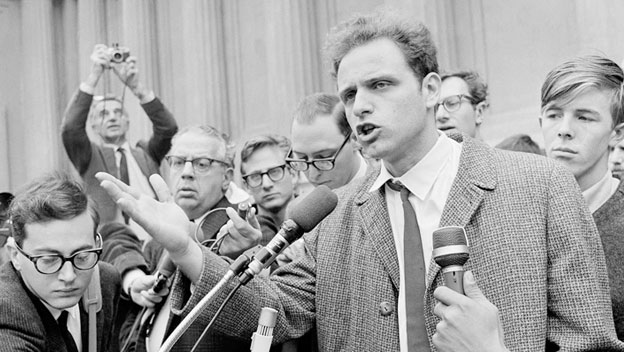
Mario Savio, a leader of Berkeley's Free Speech Movement.

It’s unfortunate, too, because the level of awareness and connection among my peers is unprecedented. Although our weapons of protest have certainly evolved since the days of Mario Savio and the Free Speech Movement, I would argue that a higher percentage of students is taking action on causes we care about now than ever. Thanks in large part to the democratizing power of the internet we grew up with, students my age have founded technology education non-profits, started popular magazines, done ground-breaking research, and fostered greater awareness about racial justice. Although we are certainly imperfect when it comes to our attitudes on a variety of social issues, we are more tolerant than our parents’ generation; according to Pew, young people continue to be the strongest proponents of same-sex marriage, with even 61% of young Republicans in support.

Your supposition in the face of all this that we are “poor kids who don’t know anything yet” makes me wonder what sorts of attitudes you would like us to learn instead. You said that college students are “the inheritors of 30 years of identity politics, and that’s part of the problem…that means that instead of saying we all have general principles by which we seek to live, that we’ll stand up…for the feminist cause, for the racial or ethnic cause.” Of course I support working toward general principles of empathy, kindness, equality, and justice. But our genders, races, and ethnicities may preclude some of us from receiving those things. You can find a testament to this in the stories of Eric Garner, Freddie Gray, Tamir Rice, or the 35 women and the empty chair on the New York Magazine cover. Choosing to act in the name of unity and ignore the disparities that stem from our differences precludes us from creating a just, kind society. That’s why it’s Black Lives Matter and not All Lives Matter, why it’s feminism and not egalitarianism. Dismissing identity relies on the wishful belief that our identities don’t matter. But until African-American boys aren’t cautioned from an early age to behave a certain way around law enforcement, and until mothers like mine don’t tell their young daughters such words of advice as “Always choose being raped if the alternative is being killed,” our identities do matter, very much. 

You discuss microaggressions as the invention of privileged young people who aren’t paying attention to bigger problems. In actuality, the term “microaggression” was not coined by a privileged group of students; it was the psychiatrist and Harvard professor Chester M. Pierce who first used the term in an academic setting. Pierce wrote in 1974, “These [racial] assaults to black dignity and black hope are incessant and cumulative. Any single one may be gross. In fact, the major vehicle for racism in this country is offenses done to blacks by whites in this sort of gratuitous neverending way. These offenses are microaggressions. Almost all black-white racial interactions are characterized by white put-downs, done in automatic, preconscious, or unconscious fashion. These mini disasters accumulate. It is the sum total of multiple microaggressions by whites to blacks that has pervasive effect to the stability and peace of this world.” This language is more radical in its estimation of long-term effects than most of the discussion around microaggressions on college campuses today. If you want to criticize microaggression theory, you should be spending your time not lambasting “privileged and pampered” kids but rather challenging a respected professor who has spent decades researching racism and its effects. I can understand, of course, that this may be a harder fight to pick.

The year I started at Berkeley, everyone on campus received the book Freedom’s Orator, about Free Speech Movement leader Mario Savio. Enthralled, I read all 544 pages. So it was with great interest that I noticed your mention of Savio in your Atlantic piece, “That’s Not Funny”: “frat boys and other campus punksters regularly flout the thought police by staging events along elaborately racist themes, events that, while patently vile, are beginning to constitute the free-speech movement of our time. The closest you’re going to get to Mario Savio—sick at heart about the operation of the machine and willing to throw himself upon its gears and levers—is less the campus president of Human Rights Watch than the moron over at Phi Sigma Kappa who plans the Colonial Bros and Nava-Hos mixer.” This statement implies that fraternity brothers acting in racist ways is a recent and modern phenomenon, when in truth, as the Washington Post points out in its thoroughly-researched article “The Long, Fraught Racial History of American Fraternities,” fraternities have been flying Confederate flags, banning non-white students from rushing, and worse for decades. Don’t fool yourself: belittling minorities by dressing up as stereotypes or popularizing slogans like “No means yes, yes means anal” (as members of DKE chanted at Yale, and Texas Tech fraternity brothers wrote on a banner) doesn’t make you edgy or cool or an activist. It makes you an a**hole. A**holes are not the unintended spawn of political correctness; they’re the offspring of cultures and families who don’t challenge themselves to analyze race, gender, sexual orientation, class, and inequalities in our society.

Challenging ourselves, and providing better education about inequality, is a lasting way to address racism, sexism, and classism among students. Someday, maybe we will have an America where students learn more nuanced perspectives on history and culture than our traditional Eurocentric diet, where we have open and honest conversations about race and gender and sexuality in our classrooms, and where people learn to respect each other before anyone ever has to call them out. Right now, in many parts of the country, we go to school with people who (roughly) look like us and talk like us and whose parents make the same amount of money as our parents. You claim that college students are being self-infantilizing in our quickness to be sensitive to members of other races or cultures, but it is the kind of insulation we grow up with in our K-12 educational experiences that provides the real infantilization. 

You have helped to propagate the false dichotomy between freedom of speech and sensitivity; the truth that I’ve experienced in my life so far is that creating environments of respect engenders more openness and free speech. College student KellyNoel Waldorf wrote an article about “coming out” as poor at Duke, aptly describing how difficult it is to reveal identities that we may not share with the majority of our peers. If your friends toss around disparaging jokes about "welfare queens," are you really going to reveal that you spent a year on state-subsidized healthcare? If your fraternity brothers, who yell homophobic epithets and laugh at anti-gay slurs with impunity, demean your sexual orientation, can you really talk about being gay? 

Speech may be free for them, but not you. 

And we are losing out on having important conversations because of it. If you seek to defend free speech, try putting yourself in the shoes of those people who society often silences. Many people argue that we are coddling ourselves, and that our bubbles of liberal sensitivity make us unprepared for the world after college. To that, I’d say that we create what we want to see in our societies in our schools. And I surely hope that you want your sons to live in a world where we are just and kind, sensitive and free.

Sincerely,

Adora Svitak
UC Berkeley Class of 2018