Monday, October 10, 2016

Neither Here Nor There

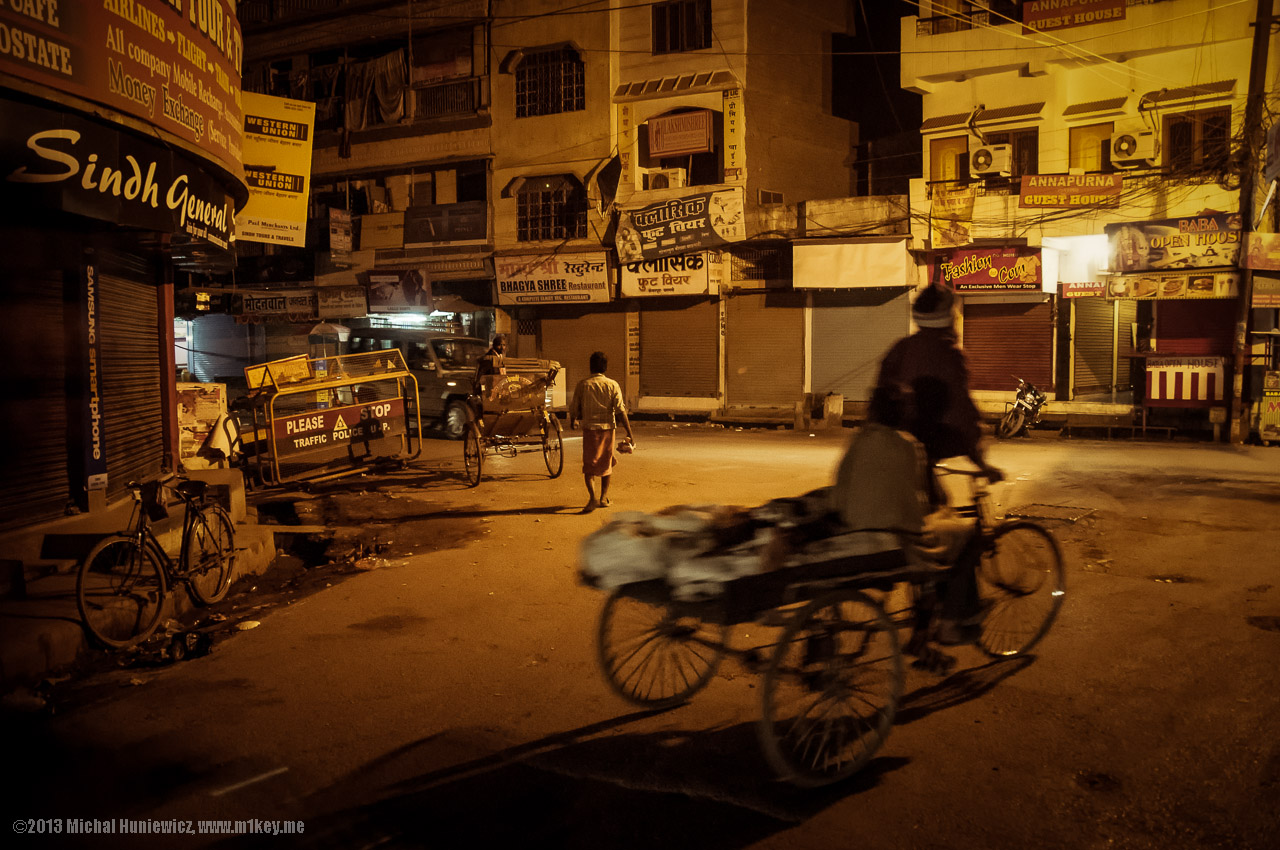
Picture from a visit to Xi'an, China. 2008.


"我不想我的肤色写我的--我的--uhhh--怎么说 'destiny'?" I said, frustrated, during one particularly angsty phone call with my mom. I was trying, clumsily, to say "I don't want my skin color to write my destiny." But there was one little problem--I didn't know how to say "destiny," and I wasn't even sure if my grammar was half-correct.

That clumsy declaration sums up my simultaneous attachment to, and flight from, the language that is my mother's mother tongue. Lots of children of immigrants can relate to the feeling of running away from the language their parents speak, seeing it as foreign, yet another thing to mark them as "other," or just inconvenient. I had a French neighbor who would speak French to her sons only to hear them respond in English: they were the blonde-haired mirror images of my sister and me in our rebellious childhood. We were Chinese school dropouts, tired of having to make the trip to Kirkland on Saturday mornings to struggle through memorizing characters we never dreamed we would need or want to use.

But it becomes a little more complicated when you're not really forced to use the language or learn it via osmosis. When your dad speaks English and all your aunts and uncles do too, it becomes pretty easy to get by on English alone. Sure, it gets a little awkward at family gatherings, when your grandparents fix beseeching eyes on you and deliver yet another lecture on the value of learning Chinese: don't you know that China is an ascending economic power, don't you know that China has 1 billion people--but you could get that from any Econ or History or Poli Sci class, so what you really hear is the subtext, don't you know that you're Chinese?

I thought of being a South Asian Studies major, once. First it started as a joke, the kind of thing I said in Facebook group chats to scare the kind of friends who think of any majors that end in the word "Studies" (whether of the ethnic, American, media, or regional variety) as hopeless wastes of money. After I'd taken my second class in the South and Southeast Asian Studies department and realized that these classes were the sources of my sole A+'s at Cal (and, more importantly, the classes I most enjoyed going to), I started thinking about it more seriously. I could happily envision taking endless classes about everything from pre-Mughal history to religious nationalism to the effects of globalization in the subcontinent.

My only hang-up was the language requirement: two years of one of the department's supported languages. I still remember telling my mom casually during a hike in Marin County that I was thinking of studying Hindi or maybe Sanskrit to do the major, instead of just the minor.

"I think the minor is enough," she said with an inscrutable expression. "What about Chinese?"

What about Chinese? 

This question has haunted me ever since I was a kid.

I don't want my skin color to write my destiny, I think now, and yet there is only one language other than English in which I can even begin to construct that sentence. When I try to use three years of high school French some mis-connected neurons in my brain send me every other word in Chinese, instead. There is only one language other than English in which I can improvise insults to say to my sister, describe my major, say the words "colonialism" and "government representation" and "politics"--

And most importantly, only one language other than English in which I can talk to my grandparents.

That was a good reason to study Chinese, said one Berkeley Language Exchange Program group facilitator. He was an exchange student from Hangzhou, a boy in a pink button-up who excitedly told us all about his upcoming performance of an Eminem song at the Chinese People's Union annual concert. He asked us all why we were studying Chinese, and he seemed singularly intrigued by my answer. He remembered it later, when I showed up to the group late one time -- "Hey! You're the one who studies Chinese to speak it with your grandparents."

Something about that web of filial piety immediately binds us together, creates recognition between the exchange student from Hangzhou and this half-Chinese girl from Seattle: no matter if we feel we are the spider spinning, or the unlucky insect fated to be devoured. Sometimes I feel more like the latter. Once, I vented to an Asian-American psychologist who I see sometimes about feeling guilty for not wanting to see my parents (who live locally) more often. She told me, with a ruefully knowing expression, "You sound so Chinese right now! You don't hear it?"

But then -- "You're such a banana, Adora." The voice of one of my friends. Banana: yellow on the outside, white on the inside. He said it after a Chinese class where we'd talked about traditional table manners, and I'd confessed I didn't know any. My family makes frozen fish filets from Costco and mixes tofu and bok choy with lemon pepper pappardelle pasta from Trader Joe's; you'll realize quickly we don't care too much about traditional Chinese cooking, much less table manners. I liked my childhood, I liked eating out at more Indian and Italian, Mexican and Thai joints than Chinese, but--

What about Chinese?

I dutifully picked Chinese to satisfy my Development Studies major language requirement. In my third semester of Chinese, "Advanced Chinese for Heritage Speakers," I sit next to classmates whose parents speak Mandarin to them regularly, a class that reminds me every day that really, I'm not Chinese enough to be there, not white enough to be somewhere else. Today when my teacher passed out test results -- I looked to my right and saw the boy next to me had gotten a 90.75, something he made a disappointed noise over -- and behind me, more 90s -- she didn't pass out my test. I went up to her and asked for my test, and she asked if I had time to stay after class. I went to her office hours, where she surprised me by printing out a blank test and asking me to redo the listening portion. "I know you don't have the same background as the others," she said softly and kindly in Chinese. It's not the only time she's alluded to this--once, she told me that she "worried" about me, because of how badly I was doing on quizzes, and reminded me to go to her office hours--you're not like the others, she'd said then too. I was a little blindsided by the generosity of being able to do the listening portion again but also too tired to do much better. I finished, and she-regraded my test. I went from 57.5 to 60.5. (Out of 100.)

Someday, I thought ruefully, maybe it's the kind of thing I can show my kids. Like the time I found one of my dad's old math quizzes from elementary school at my grandpa's house and he had a D, and it was so funny because my dad was so good at math. But that was only funny because of his PhD in Physics, and I wonder if my Chinese test D will ever be funny in contrast to some hoped-for eventual fluency, or just another reminder that I failed to be good at the one language that people expect me to speak. I'm serious: people (usually well-meaning 60-something white men in tweed suits) have approached me at conferences and started sentences with "Ni hao!" Just like that: a brutal reminder that I am at least slightly Other, and that no number of reminders that I was Made in the USA (e.g., first line of my Wikipedia page, "born 1997 Springfield, Oregon") or SAT vocabulary words in my speeches can erase the everyday fact of the color of my skin.

That same color of my skin that I don't want to write my destiny.

When I walked out of my teacher's office hours there was a balding white man who emerged from one of the offices in the same hallway; she saw him and they conversed briefly in fluent Chinese. Two other classmates and I exchanged a shocked glance, and one of my classmates said, "He speaks better than me!"

I will never get that kind of reaction for speaking Chinese. If I'm lucky, a "You've improved!" but otherwise a sort of palpable disappointment that it isn't better. When Gary Locke went to China as the American ambassador, a tremendous amount of awkwardness ensued when people expected him to speak Chinese and he couldn't. My teacher held him up as a cautionary tale.

It's a tremendously shallow desire, but deep inside I want to be that guy in that hallway, not Gary Locke. I want to be able to walk into a room and speak a language that no one expects me to know, instead of forever feeling duty-bound by heritage to study one language, but too un-fluent to claim it passionately.

Does this make me a traitor -- to my heritage, to my family, to myself?

I declared my Development Studies major in the office of an advisor who I can only describe as one of those jovial tall white guys who seems like an Adult Who Plays Sports (probably something cardio-intensive like Ultimate or soccer or running marathons, and probably with other tall, pretty people). He looked at my transcript, looked back at me, and said in the blunt way that funny people can get away with, "You know that studying a language that doesn't align with your regional concentration is pedagogically crap, right?"

He was so jovial that I responded only, dryly, "I'm aware."

What I didn't say: Mr. Major Advisor, I do this pedagogical crap because it doesn't get easier, walking into family reunions and being reminded of my shirked responsibility, answering people's questions as to why I'm studying South Asia and not East Asia, why I spent my summer in India and not China, constantly trying to outrun and disprove the tenacious notion that I want nothing to do with my heritage. I do this pedagogical crap because it is my penance, my haircloth shirt and my bread and water, for using my other classes to study history and culture and literature so foreign to my grandparents.

See, Mr. Major Advisor, I do this pedagogical crap because I'm not white.

When I was little, I wanted to look white (more on that here), and maybe my misguided obsession with physical appearance belied a desire for a sort of freedom: when people have forgotten who your ancestors are and where they came from (I mean, we say 'white people,' not 'Irish-German-Czech-French'), your ethnicity goes from being the determinant of the languages and cultures you study, to a mere suggestion, to irrelevance.

I suppose you can call it freedom; I suppose you can call it loss.

I'm undecided. And so I plod on, clumsy composition after composition and failed test after test, trying to catch up, trying to memorize the characters to--if only on the surface--rewrite myself.

Friday, September 09, 2016

Spectating

Edgar Degas
All the world's a stage, and all the men and women merely players - Shakespeare, As You Like It 

The other day, I vented to a friend about how nervous I was for an audition for an on-campus improv group. I wasn't optimistic about my chances. He asked what was so hard about improv, and I said that, at least for me, it was hard to get out of the sense of being a spectator of myself.

"So...you're just looking at yourself?" he laughed.

I spectated, then, I guess; I saw my words through what I imagined to be his eyes, heard my own words a little distorted. "Being a spectator of myself." Suddenly it sounded like something vain, like a preoccupation with staring at your own glossy reflection in an imaginary mirror, always hovering above you.

"No, not just like that," I said defensively. "Haven't you ever been in a conversation with someone where you find yourself seeing yourself from the other person's eyes, except it's not really their eyes, it's what you imagine them to be thinking? That's what I mean by spectating."

"At that point, I just give up," he shrugged.

We waved goodbye as he walked away and I went to line up in a crowded cafe for an overpriced cup of watermelon chunks. I kept thinking about being a spectator, though, and its ramifications. I thought about it when I ran into someone I knew, waiting in that line, and one of my first instinct after I walked away from the cafe and the conversation was to look at myself in the mirror in a library bathroom to see how I had looked. It's a peculiar instinct, because I doubt that he or anyone else much cared, or would remember. It was an un-extraordinary outfit--a blue merino sweater that kept riding up, and a striped button-up shirt.

Awkwardness and self-consciousness are states of being that are at least comfortingly ubiquitous--most people can at least relate, even if with only one or two experiences, to a sense of utter mortification. Maybe that's why we can use questions like "What was your most embarrassing moment?" as convenient mediums for fostering bonding. Everyone has an answer.

And in order to have that answer, you need to have a sense of being a spectator; how can you know your most embarrassing moment if you didn't see the moment, even briefly, through the eyes of someone else? Embarrassment is a state that relies on the perceptions of others, and our perceptions of their perceptions too. It is embarrassing to, as one of my friends did, have uncontrolled explosive diarrhea in a dirndl and liederhosen store at the Munich Airport not just because of your personal standards but because of spectators.

Briefly, in embarrassment, you become one of them.

But what happens when this spectatorship is not only trotted out for special and catastrophic events in liederhosen stores, but is everyday? Mundane? Then you stop being "in the moment," and you move someplace far away from the moment. Like the perch above California Memorial Stadium where they fire off the cannon, where you can stand and see the happenings below--but are powerless to play the game.

No one likes feeling the spectator passing judgment. So we drink at cocktail parties until the spectator is swaying in its step, hazy-eyed and hard of hearing. We stay up late to lull the spectator to sleep until it's snoring on our shoulder, and then we can share secrets with our 4AM BFFs. I once read a line, "Secrets are the currency of intimacy," and I remember this now because the link between intimacy and spectatorship is so deeply fraught: the famed American sex researchers William Masters and Virginia Johnson even coined the term "spectatoring" in the context of sexual intimacy and how this behavior, a sort of profound self-focus and monitoring, could preclude enjoyment. Certainly it does for casual conversation.

I have friends for whom this level of self-consciousness seems alien. They exude a certain kind of ease--the ability to throw themselves onto a couch that isn't theirs and sprawl gangly-legged all over it, to curse animatedly and reveal heated opinions in front of people they've just met, to disclose emotions and experiences with the comfort of the assumption that nothing is too sacred to be spoken of. And it's not that they're insensitive (usually); just that they don't seem to need anything to let go of their reservations. And that's sometimes contagious--once I started talking to one of them in a Berkeley bookstore and we found ourselves talking so loudly that a woman marched over and belligerently shushed us, and we fled in a storm of giggles.

I love my memory of that obnoxious moment. It's also the kind of moment that I rarely catalyze for others.

I tried to explain what it's like being with people like that to another friend. "You'd never step on a book, would you?" I asked him. He said no, and I clumsily tried to summarize the difference between him and these other friends with that one thing: "there are some people who will step on books, and some who won't, you know?" My friends who don't seem to have a spectator on their shoulder all the time are the kinds of people who take up space without apology. They probably step on papers and books and maybe, inadvertently, people, too. But all my thinking about spectatorship and how much it ties my tongue has made me consider friendship and community, at their strongest, to be a kind of stepping on and being stepped on and snapping right back up. Of lying in the same bed and rolling closer to each other, instead of staying militantly to your side because you don't want the other person to think you're taking up too much room. If you are, they'll just push back.

And maybe this fearless give-and-take, more than secrets, is the currency of intimacy.

Monday, August 01, 2016

I'm With Her


When I watched Hillary Clinton's speech at the DNC, I teared up. I'll admit, not as much as I did for Michelle Obama. But when Clinton said, "Tonight, we've reached a milestone in our nation's march toward a more perfect union: the first time that a major party has nominated a woman for President," I found myself remembering 2008. 

In 2008, I was a ten-year-old girl who desperately wanted Hillary Clinton to be the Democratic nominee. My family was neatly split down the middle: my mom and I backed Hillary Clinton, while my sister Adrianna and my dad backed Barack Obama, who I derided as "too young and inexperienced" (the irony of this opinion, in contrast to the sentiments of my 2010 TED talk, does not escape me). My dad would listen to Obama and Clinton soundbites on NPR while driving the family van. I asked him on one of those drives why he was supporting Obama. He said with a thoughtful frown that Clinton's seeming hawkishness--her vote for Iraq especially--gave him pause.

Buried under the weight of stereotypes that expect them to be soft, overly emotional, or even "hysterical," women in politics frequently struggle to claw their way out of this trash heap of biases and be seen as Commander-in-Chief material. It's a fine line to walk, though, as evidenced by my dad's hesitations about her in 2008. Back then Clinton also attracted derision when the president of the Sheet Metal Workers' Union introduced her during an Indiana campaign stop as "an individual that has testicular fortitude." Clinton's "testicular fortitude" may lend itself to accolades like Michelle Obama's praise of her toughness and persistence, but this election cycle it has also led many of my friends to criticize her. How could we vote for Hillary? they've said, in Facebook posts and Twitter retweets of thinkpieces on her stances on foreign intervention, failure to support legalizing gay marriage earlier, or support for her husband's welfare reform policies. On Real Time, Bill Maher joked that Clinton should ditch the mother/grandmother image and instead accept becoming the "wolf that has bits of Grandma in its teeth." Accept the "Crooked Hillary" moniker, he said, just make it clear that you're "Crooked for America Hillary."

Jokes aside, it's important to recognize that Clinton is not purely the DNC's saintly grandmother wreathed in white--nor is she anything close to the "super-villain" of Republican fantasies. One thinkpiece I read criticized Clinton's status in popular culture as a role model for young women, saying that her nomination only proved that little white girls could grow up to be president, nothing more. I completely get behind the idea that we need to present more diverse role models to our children, especially women of color. I grew up on a pretty embarrassingly steady diet of books about white women. But I also disagree with the idea that we can only draw inspiration from people whose identities or ideals align completely with our own. 

As a kid, reading about people like Elizabeth I, Catherine the Great, and Eleanor of Aquitaine inspired me. Sure, their power was derived from deeply unequal societies that concentrated wealth and power in the hands of unelected monarchs. Did that faze me? Ehhh...not really. Consider that I also read ancient myths like The Iliad and The Odyssey. In these myths, you'll encounter gods and goddesses--glorified in statues and temples--who rape and kill innocents with abandon (remember Zeus turning into a bull to kidnap Europa?) And beloved characters in India's Mahabharata practice brutal caste discrimination (consider the treatment of nisadas, like when the guru Drona demands the thumb of the archer Ekalavya). 

If you like art history, you might know that the Impressionist master Paul Gauguin--whose painting of two Tahitian girls recently sold for a record-breaking $300 million--also slept with Tahitian girls as young as 13, infecting them with syphilis. 

The Nobel Prize-winning Aung San Suu Kyi has come under fire for ignoring the crisis of the Rohingya in Myanmar (a minority ethnic group being mercilessly persecuted) and even muttering "No one told me I was going to be interviewed by a Muslim" under her breath during an interview with BBC journalist Mishal Husain. 

Mahatma Gandhi's beatific face appears everywhere from Indian rupees to tote bags in Berkeley, but he used derogatory terms for black South Africans and complained about blacks and Indians being classed together in jails. His misogynistic tendencies included responding to sexual harassment by "forcibly cutting girls' hair short to make sure they didn't invite any sexual attention" due to the assumption that women, not men, were responsible for men's impulses. He stigmatized menstruation and contraception, and slept next to women (including underaged girls), using them as "props to coax him into celibacy," Mayukh Sen writes. The article is part of an entire series on Vice's Broadly called "You Know Who Sucked," with clickbaity-but-accurately-headlined takedowns of historical icons. "Einstein Was a Genius At Treating His Wives Like Shit." "John Lennon Beat Women and Children." It goes on. There's a Tumblr, "Your Fave Is Problematic," that takes on pop culture celebrities--all their racist theme parties, sexist comments, anachronistic views. 

Everyone we love has done some fucked up shit. Or, as the BBC article about Gandhi stated in a more genteel way: "But even the greatest men are flawed." 

Is Hillary Clinton not allowed to be?

Many of my friends who backed Bernie in the primary are claiming they won't vote for Clinton this election because of all the flaws that make her too unpalatable for them. Look: I can appreciate a criticism of neoliberalism, the Clinton Foundation, mass incarceration, American intervention in other countries, and whatever else as much as the next Berkeley student, but there is a time and a place for sticking to your guns. The national electoral battlefield does not exist to be a soapbox for spewing ideological purity. It's our stab at trying to make a better future. If you find it difficult to imagine supporting Hillary Clinton, then choosing not to vote or voting for a third party candidate (this article is one response to that) might soothe your individual conscience. But it does nothing to help our nation. 

Once upon a time, I was a ten-year-old who cheered at her rally, peering at the stage from behind burly guys in their union jackets. All I wanted was to get a sight of the woman whose face I'd cut out from a TIME Magazine to tape haphazardly on my pink bedroom wall--and there she was, a fuzzy black-pantsuited dot to my nearsighted eyes. 

Eight years later, my appreciation of Hillary Clinton is a little less hero-worship and a little more tempered by reality. I saw a picture one time from her Wellesley days, her long hair and big glasses, and I felt a twinge of recognition. Her campaign slogan, "Stronger Together," is reflective of the humility that we all need to embrace. Eight years ago, I saw Clinton in the same way I saw Elizabeth I and Catherine the Great and Eleanor of Aquitaine, my lineup of powerful women who I looked up to without caveats. Now, I see her the same way I would want someone to see me if I were in her shoes: someone who's profoundly human and trying her best. Someone who's imperfect, too--but then, so is America.

Sunday, June 19, 2016

Misadventures on Indian Rail

Photo from Rajasthan Tourism Buzz website


There's a boy maybe my age walking on the platform, wearing no shirt and the dirtiest pair of pants I've ever seen. There are four long scars across his chest, as if someone had taken a knife to his skin. His hair is matted and he looks like an old sepia-toned film strip, the way he's covered in dust and moving, as if in flickering slow motion, in the cursed heat. It's something like 100 degrees in Agra, but it feels like more on this railway platform. The boy jumps onto the tracks.

"Look," my friend from Berkeley says in shock, "he's eating food off the ground!" She stares at his retreating figure, bending down to pluck scraps dropped by passengers or food sellers balancing baskets of fried foods as they cross the tracks. Food and people share the tracks with waste: rotting shit surrounded by flies. A lean monkey follows in the boy's footsteps and starts foraging.

We are standing on Platform 2 waiting for a train that seems it will never come. Departure: 3:45pm, our ticket said. 3:40, bhaiyya, train kahaan hai? approaching two men in long dress shirts sitting near the wall. I point at the e-ticket printout, lightly crumpled with the sweat off my palms. 3:41, rivulets of sweat everywhere are drawing lines, turning my skin into a map, territories everywhere being divided up by new borders. 3:41, This train 5pm they say, exchanging glances with each other.

"Let's ask someone else?" I say to my friend as we thank them and walk away, hesitant to believe that our train could be so late--especially since the train name and number haven't shown up on any of the departure boards that are supposed to show delays. We walk toward the "Enquiries" sign and hand our ticket to one of the officials uniformed in khaki; the room is blissfully equipped with a ceiling fan. He looks at it and hands it off to someone else, who starts looking at his phone. We sit quietly. The train will come to Platform 2 at 4pm, he says.

We trudge back up over the footbridge and back to Platform 2. 4:01. 4:02. It is 4:09 and still the train has not come. When we hear its whistle in the distance we look toward the oncoming train with relief. Time to find our car. We get onto the 2AC car (second-tier air-conditioned) and ask multiple people, pointing to our ticket. Everyone tells us different things. By the time the train is moving, we've resolved to just sit down in a random berth and wait for the conductor to come help us sort things.

I ask another passenger if the train is going to Delhi. He nods.

"Oh right," I say to my friend, "I saw it on the train name. The terminus H. Nizamuddin--it's a rail station in Delhi."

Then I look back to our e-ticket and realize that the train we're on is a train from Mysore to H. Nizamuddin, while our ticket was supposed to be Visakhapatnam to New Delhi Railway Station. Different terminus. Different train.

4:15, we're on the wrong train. I know it with a growling certainty in my stomach, but we wait for the conductor to come anyway. He tells us to go forward, pointing us further and further into the train. We go through 2AC, enter 3AC. Forward, he says again. Into sleeper class? we ask, incredulous. The train stops at a small station, somewhere in Agra still (maybe, we don't really know where we are) and he says, "Get off here. Next train. Or sleeper class." It's clear: either we can get off at this station to try to get on another train, or because our ticket wasn't for this train he'll send us to the significantly more crowded (and non-air conditioned) cars to attempt to find somewhere to sit.

We step off. Standing on the platform as the train leaves, we realize that we have no idea where we are or whether the next train that comes to this sleepy railway station will even go to Delhi. At this point we care less about rosy visions of luxuriously air-conditioned berths and more about managing to make it out of Agra. There are hardly any people milling around, so we find a small building with Hindi text painted all over the walls and peer inside. There, we ask the station manager for help. He scrutinizes our ticket, makes several calls, and gives us the bad news: the train we were supposed to get on has already left Agra Cantonment, and it doesn't stop at this station. He pulls out a plastic chair and invites us to sit. We demur; he insists. The guest is God, a line we heard uttered by a tour guide in Jaipur, comes to mind. I sit.

5:05. We watch, forlorn, as the VSKP NDLS AP Express (the train we were supposed to get on) whizzes by. Two security guards in khaki bring in polished black assault rifles. They discuss the guns with the station manager while I Google the Agra Cantonment departure board on my phone. We have to get back to the Agra Cantonment station, we tell the station manager; we're going to try to get tickets for the Gatimaan Express, a fast train between Agra Cantonment and New Delhi.

"Very costly," the station manager warns us. "1400 rupee." We don't care. He says that he will send one of his men to help us get an autorickshaw. We thank him profusely and one of the security guards escorts us outside and hails an auto, starts bargaining for us in Hindi and tells the driver that we have to make the Gatimaan Express train, which leaves at 5:50pm.

The autorickshaw whizzes through alleys and traffic and one-way streets, once almost colliding with a cow ambling into the street. It's 5:22, 5:30. 5:26: we reach Agra Cantonment. I start running to the booking counter, heat be damned. I stand behind a large group of men and somehow get up to the counter. "Gatimaan Express?" I say breathlessly. I have to go to the Reservations counter, the Booking Counter man says. I scan the station for the Reservations counter.

"Gatimaan? You need to go that way," says a man in a dark red shirt, pointing forward. He looks breathless too. He takes off running ahead of me and I follow him, throwing myself into the Reservations room right behind him. I can understand a little bit of his discussion in Hindi with the Reservations man; at 5:35, it's too late to get tickets for a 5:50 train.

"Can we just get on and pay on the train?" I ask desperately.

"You can get on...there will be a penalty," the Reservations man says.

"How much?"

"Around 1200 rupees."

I ask a guard where the Gatimaan is, sounding more pitiful than usual, and we run to the platform to board. It feels like an Amtrak train. No long berths, just normal seats. The only problem is that each time we sit down somewhere, someone comes--it's their reserved seat. We walk and walk until we end up in a sparsely-occupied coach in Executive Class and sit down, relieved.

The conductor, holding out the long reservation chart, asks for our names. We explain the situation and he tells us that we will have to pay 3000 rupees. Each? we wonder, but we don't have the time to ask, because he says that he will come and get it later. He proceeds to check everyone else off. I don't have 3000 rupees; in fact, I don't even have 1000. I underestimated the amount of money I'd need for Jaipur and Agra (note to anyone planning to visit the Taj Mahal: it's quite expensive for foreigners); I'm down to just about 400 rupees in my purse and some tens, stashed in a book in my backpack. I know my friend would be able to cover me if it was closer to 3000 total; I'm not sure about 3000 each.

The conductor doesn't come back for a while, but every time the coach's doors open for someone I get a little twinge of fear, wondering if it's our time to pay up. I decide to fall asleep just to avoid the fright and sleep until one of the onboard food servers asks if I want a Minute Maid Nimbu, a boxed lemon juice drink probably more sugar water than lemon. I say yes and then quickly ask, "Er--is it free?" She laughs and says slightly reproachfully, "Yes, ma'am." I haven't had boxed juice in ages. I drink it quickly and convince myself that the sugar is good for me because maybe, just maybe, I sweated sugar out earlier and need to replenish my body's stores or something.

It's almost 7:30pm and we're pulling into New Delhi. I feel a slow relief start to wash over me, but I'm still aware of the specter of 3000 (or, potentially, 6000) rupees hanging over us, so I close my eyes again to drift into blissfully anesthetizing sleep.

There's a tap on my shoulder. Conductor, looking at me with kindly eyes through his glasses.

"Ma'am?" he says. It's time to pay up. He says it's 3000 each. We plead, showing him our original ticket--surely that should be taken into account? The man at the reservations counter at Agra Cantonment said that the penalty would maybe be 1200. Certainly not 3000. But we're sitting in Executive Class, the conductor counters. We don't have that much money, we say. He sighs and asks for a passport. I hand him mine. He takes it, and the e-ticket printout, and walks rapidly to the next car. "You will get your passport here," he says. I'm confused--where is my passport going? I follow him. We meet him in the next car, which is empty.

"1500," he says quietly. It's quite the discount from the original 3000. My friend hands him the money instantaneously--it seems to be only 1500 for the both of us--and we get off the train. It feels unreal, stepping onto the platform in Delhi. There's that feeling of relief, a relief I usually associate with familiar places--but it's interwoven with the cacophony of strangers, glaring lights and honking horns. NDLS, 7:35pm. A funhouse-mirror version of coming home. 

Thursday, June 02, 2016

Delhi, Day 3


Delhi, Day 3: 108-degree weather and what Google likes to call "extreme dust" makes you run out of clean clothes pretty fast, so I went on a lone excursion to Fabindia to buy some new clothes with the plan of calling an Uber both ways. I checked out as the store was closing, went outside, and then tried to call my ride home. A lot of shops, not just the clothing ones, were starting to close. Their lights, that illuminated my position, turned out up and down the block like dominoes. There are different kinds of night: Times Square night, where the lights never dim and people never disappear, and real night, where lights go out and the city blocks belong to men. It felt like this street's night was just beginning.

I decided to call the driver. He picked up, but promptly rattled off a string of Hindi words I didn't understand in response to "Hi! Where are you?"

"Uhhh....uhhhh...tum kahaan hai?" I asked, having no idea if that was correct or not. I didn't understand his answer (more rapidfire sentences), and mentally kicked myself for not learning more Hindi. I requested another Uber and called the driver. He also didn't speak English. At this point I was actually really freaked out about how I would ever get home and felt painfully aware of the fact that I was the only girl standing around. One of my friends told me to try to look less like a foreigner by looking confident, always. The pressure of trying to maintain an ironclad game face while being completely nervewracked in actuality only contributed to my worry.

Finally I glanced desperately at a queue of men in dress shirts milling around a food stall and said nervously to one middle-aged man holding a cigarette, "Excuse me sir, do you speak English?" He said yes and I showed him my Uber screen and explained the situation.

"Do you want me to speak on the phone with him for you?" he said kindly.

I nodded in relief, handed him my phone, and listened (trying to catch words here and there) as he explained where I was. "Your Uber will be here in two minutes," he said as he ended the call and handed me back my phone.

"Here's your Uber," he said, motioning to the white Maruti Dzire that pulled up. I hopped in, uttering my thanks, and got safely home.

The whole experience was a little overwhelming in the moment (OK, let me be real: I almost started crying in the street) maybe because of who I am: I try to be cautious, planning, and always aware of how to get from point A to point B. I send my location details updated in real time via the app Glympse to friends I'm meeting with when I walk across campus in Berkeley, for goodness's sake. And I never quite grew out of that whole "Don't talk to strangers" thing.
That's very different from my mom, who is the type of person to convince friendly strangers sharing a sleeper train compartment to share a tour guide and stay at the same hotel (it's how we toured around Xi'an, China with a British anesthesiologist), to ask people she's just met to carpool (she doesn't drive), and to carry a densely packed suitcase as carry-on luggage--enabled by the fact that without fail, someone else on the plane will step in and do the job of lifting it into an overhead bin with her. I don't think I ever appreciated that quirk--I saw my mom's interdependence as a reflection of poor planning or overdeveloped sociability or both.


But if there's a moral to the story of tonight's shopping excursion (aside from making better plans and learning more Hindi), I guess it's that yes, confidence and fearlessness and planning are all good things but at least once in your life, you may wind up in a situation where you feel frightened and perplexed and alone. And when that happens, maybe a random man waiting for street food will help and talk to your driver, and the car will come. Maybe absolutely everything will be OK. Maybe you'll get back to your guesthouse and eat chapatis and think, even though you'll try to make more watertight plans in the future, you'll make them for better reasons than simple fear. Because if you really really have to, there are always brightly lit spots in the nighttime, and friendly people on lonely streets. 

Friday, April 08, 2016

waving at things


It is a fact universally acknowledged that little kids enjoy waving at things -- passing trains, cars, ferries, planes -- much more than adults, and I was no exception. I recall one time vividly -- I was eight years old and small, small enough to cram into the Dodge Caravan backseat that was supposed to seat just two people with my sister and a friend. While my dad harrumphed about traffic and the questionable legality of our seating arrangement and other Adult Things, his hand steadily on the wheel as we drove across the floating bridge into Seattle, I craned my neck back to look at the car behind us. I waved frantically.

And then, miraculously, the lady with blonde cropped hair driving the car behind us waved back.

I nudged my sister and our friend. "Look! She waved!"

The three of us all then began waving even more vigorously, and she waved back more, and then she opened her sunroof. We saw her slim, white hand emerge from the top of the car, suddenly waving like a kite loosed from its fetters.

We whooped.

I remembered this moment, which delivered such glee to us when it happened, because I was walking to class one sunny day, about to cross the street when a car braked to let me pass in front. The windows were all down and in the back four small kids with big grins all tried to stick their hands out the window, waving as vigorously as I had one day, some ten years ago. "Hello!" one girl yelled excitedly.

"Excited" isn't specific enough to describe her tone. It was the kind of tone you use when every word still feels new-ish. One day when I was small, I learned the word "exhausted." I said it over and over again as much as I could, described everyone and everything as "exhausted" or "exhausting." That new word tasted like candy the moment it touches your tongue, the moment when the sugar feels like liquid gold.

The kids waving made me smile, even laugh a little, so I waved back. Hesitant at first, and then more enthusiastically, until I had crossed and they were turning.

I remembered that woman in the car on the floating bridge, and a scene in Harry Potter and the Prisoner of Azkaban where Harry sees his future self (thanks to a Time Turner), and then I had a nonsensical thought -- is this what it feels like to see your future self cast a Patronus? But mostly, it made me feel adult, in a way I couldn't neatly describe as "sad" or "happy." I have become the blonde lady on the floating bridge, I thought; now, I was the one who was waving back.

Sunday, March 06, 2016

Racism close to home, Part II

Photograph from the "Persuasion" series
My junior year of high school, I made friends with two seniors -- friends of my sister's, really, who I managed to co-opt by the desperate accident of looking for people to sit with at lunch on the first day of school. I'll call them Ted Zhang and Damon Chen for the sake of privacy. I got to know them pretty well over the course of a semester, because every morning Damon would drive up to my house, Ted in the passenger seat enthusiastically bobbing his head to whatever throwback mixtape was in the CD player, and I would clamber up into the back seat, like I was just the kid sister being picked up for school.

The first thing I noticed, from the day I sat next to them in that crowded cafeteria, was that they looked alike, but had ways of speaking and acting so different that sometimes they seemed like fraternal twins half-trying to disavow their blood. All those mornings we rode to school, Ted did most of the talking. He'd casually toss around comments that I'd wince at or say "come on" to, things like "I raped that test," "Chink," or frequent uses of the N-word. Sometimes I wondered if I was out of line for telling him off after one too many "slanty eyes" comments (after all, wasn't I less Asian than he was?) but I figured there was something universally reprehensible about most of the phrases he used.

He kept on using them, and I kept on calling him out--ineloquently, between the choked-back laughs of my shock--and Damon kept driving, with the hint of a grin playing at the corner of his mouth.

I remembered junior year and those morning drives with these guys, who I haven't seen since I left Redmond, because of thinking about the way we use language and what it says about how we think about race. In my earlier post I may have oversimplified racism.

I say this because when I think about the way Ted spoke, the way he tossed around racial slurs in those winter mornings and then went to our AP US Gov class in the afternoon to learn about civil rights, I don't think that prejudice--at least not prejudice in that moment, in the moment's intention of saying it--laced every word he used. I'll never know for sure why he used the N-word at random times, whether to provoke a reaction or out of habit or what, but he never said it with malice.

I feel similarly confused when I remember a brouhaha that erupted on my dorm's floor my freshman year of college. It was sparked by some (also male, also Asian) floormates whose use of language could be careless, obnoxious, and offensive.

It was easy to condemn their language. It was more difficult to condemn them. They, too, were my friends.

One thing that confuses me about the offensive use of language by friends is that they're usually minorities themselves. I don't have any white friends who would ever consider tossing around racial slurs in casual (or even non-casual) conversations, and when I think about which of my parents is the more careful with language I know immediately that it's my (Caucasian) dad. This caution is probably a good thing, the natural behavior of inheritors of a past (and present) of unjust privilege.

So what about the Teds?

Their offensive language use is inextricably linked to masculinity. Author Michael Dyson said, "When you think about American society, the notion of violent masculinity is at the heart of American identity." So here's a thought: when Ted used offensive language, and when other Asian guys I know toss around the N-word to greet their friends, it's not because they have some long-standing beef with African-Americans.

It's an instinctual response to a racist, sexist society that perceives African-American males as paragons of hyper-masculinity while seeing Asian-American males as effeminate. (Although this connection first appeared to me in the context of Americans of East Asian descent, I think an argument can be made that it also applies to Americans of South Asian descent; Thangaraj's Desi Hoop Dreams says, "South Asian American men are not usually depicted as ideal American men. They struggle against popular representations as either threatening terrorists or geeky, effeminate computer geniuses.")

In his 1996 opinion piece in the New York Times, writer David Mura wrote, "In the movies, as in the culture as a whole, Asian-American men seem to have no sexual clout. Or sexual presence...In fiction, when East meets West, it is almost always a Western man meeting an Asian woman...And where does that leave Asian men?" (who are straight and gender-conforming, it's worth adding--check out an excellent article in Everyday Feminism).

Unfortunately, things haven't changed much twenty years on from Mura's piece. Depictions of Asian-American men still tend to follow the same tired tropes. Although there's more awareness of the issue (and projects like Persuasion, a photo series celebrating Asian men and attempting to break down the stereotype of femininity), Asian-American men still face a media and society that conveys harmful stereotypes. One journal article discussed how Asian-American college students reported confronting several stereotypes, including sexual inadequacies, interpersonal deficits, and unflattering physical attributes.

So what do you do? A crisis of masculinity, created either by being in homosocial group situations or, more broadly, a nation where conventional masculinity is highly prized, means reaching for any means of establishing masculinity possible. In some cases, appropriating "blackness" is seen as an answer. This is rooted in age-old perceptions of African-American men as, in the words of Occidental College professor Lisa Wade,

"more masculine than white men: they are, stereotypically, more aggressive, more violent, larger, more sexual, and more athletic...Likewise, Asian people are feminized.  Both Asian men and women are seen as somehow smaller, more passive, the women sweeter, the men less virile. These are cultural stereotypes derived from the particular history of the U.S."

In a press release in 2014, the American Psychological Association discussed a study showing that young black boys are perceived as older and "less innocent" than whites of the same age. This has had horrific implications for the safety of young African-Americans, and it has also reinforced the link between blackness and archetypes of tough, violent masculinity. Saying the N-word to greet friends, sagging your pants, singing along to gangsta rap -- these choices to "act black" or seem "ghetto" (both also rooted in highly problematic assumptions) are reflective of an aspiration to masculinity.

The transgressions of people like Ted, of course, went beyond saying one word; it was a whole way of speaking, when the three of us were in the car, that indicated there were no lines too sacred to cross. In retrospect, this kind of attitude seems aggressively masculine (or at least stereotypically so). Girls are raised to be "nice," to think about what people's reactions may be to any given action, to perform countless tasks of emotional labor.

In contrast, the unfortunate saying "nice guys finish last" aptly summarizes a common social perspective on "niceness" and masculinity; whereas inoffensiveness is prized for girls and even a marker of femininity, it can be (particularly in homosocial groups) stigmatized for boys. In short, saying purposefully offensive things translates to "I give no f**ks," which we associate with masculinity. It explains a lot -- why I sound like more of a jerk when I'm the only girl in a large group of guys, why guys who in private might be kind and sensitive say highly questionable things when they're mainly surrounded by male peers.

All this also makes eradicating the kind of racist language I hear all the time from Asian male friends that much harder -- because they live under the specter of racism too, not the hands-up-don't-shoot brand but rather a racism that tells them they are less of men, and that whole thing is tied up with sexism too. What should I say, then, when "Don't say that, it's rude" is not enough? "Don't say that, you're stronger than succumbing to outside pressures to strive for an image of violent masculinity in order to fit in with your male peers or reclaim a sense of sexual agency our stereotypical media representations and racist society have stolen from you?" It just doesn't roll off the tongue. I wonder what Ted would have said, if I had said that to him when I was a high school junior in the back of the car. Probably rolled his eyes and told me I was overthinking it.

He added me on LinkedIn a few days ago. I was interested to see what he'd been up to in the years since we last talked. I scrolled through his profile, saw that he would be graduating college next year, and then looked at "Interests." 

Economic empowerment? Education? Hmm, I thought, never knew he was into that stuff. Somehow I'd just assumed that he'd still be the same Ted I'd known when I was 15. I kept reading the bullet points on the Interests list. Human rights? The environment? Damn, I thought. 

And then, another interest that made my eyes widen:

Social Action and Civil Rights.

Thursday, March 03, 2016

Racism, close to home

Kam Chancellor (Seattle Times)


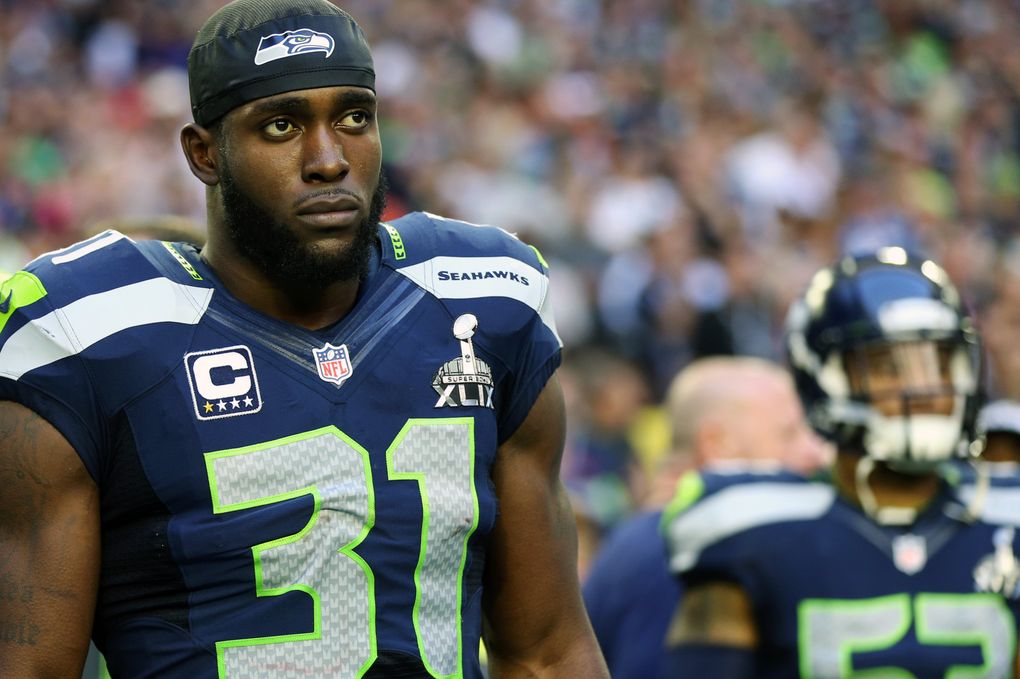
I'll freely admit that I don't really follow sports, but the headline "NFL Star Visits Gym He Wants to Buy, Employees Call the Cops On Him" caught my eye because it happened in my hometown of Redmond. Growing up, I walked past the RAC (the gym Chancellor was looking to buy) frequently on my way to QFC or Starbucks or the Bella Bottega movie theater -- a part of the landscape I thought of as home. The recent event with Kam Chancellor puts into stark relief that racism, too, was -- and is -- part of that landscape. 

In his monologue at the Oscars, comedian Chris Rock repeatedly asked, "Is Hollywood racist?" He finally answered his own question with the line, "You're damn right Hollywood's racist...Hollywood is 'sorority racist.' It's like, 'We like you Rhonda, but you're not a Kappa.'" What he termed "sorority racism" stands in contrast to more obvious and extreme forms of racism, like burning crosses in someone's yard or making vast and unsubstantiated criticisms of minority populations (cough Trump's "they're not sending their best...they're sending...drug dealers, rapists" cough). 

You could just as well substitute "Redmond" or any other similar suburb for "Hollywood" and get the same answer. Because the thing is, the folks I grew up, and their parents, would never attend a White Pride rally or fly the Confederate flag or advocate segregation in our schools. In fact, every year, we had an assembly to celebrate Martin Luther King, Jr. Day, with students of all ethnic backgrounds trotting out touching speeches and poems and songs. 

And yet in this same place, I heard white boys in the hallway greeting each other with bro hugs--and then the N-word. A tenth grade classmate broke up with her Caucasian boyfriend after he wore blackface and sagging pants to dress up as a "thug" for Halloween. We (and I say "we" because I was guilty of this too) tossed around words like "ghetto" more than the brunch ladies of this Saturday Night Live sketch without any consideration of the problematic context of the word (Clutch Magazine: the word "has become synonymous with...stereotypical black, urban or hip hop culture"). 

What makes all of this so hypocritical is not just that we purported to be educated and smart and good, the types of kids to take AP classes and do great MLK assemblies and vote for Obama. What makes how we behaved hypocritical is that we all benefitted from everything we implicitly disparaged. We laughed at Ain't Nobody Got Time for That and Motherfucking Bootleg Fireworks and Hide Yo' Kids Hide Yo' Wife -- and somewhere in between our laughs, eked out, "That's so ghetto." We could use phrases like "Yaaaasss queen," call someone's "eyebrows on fleek," even do a wall twerk at a party and it would be "cool" and "hip" instead of "skanky" or "ratchet." I have never been followed around a store, stopped by a police officer, or worried that my name would be a liability on a job application ("white-sounding" names are 50% more likely to get called for an initial interview).

Simply put, the rules are different for white and Asian kids in the 'burbs. And somehow, we never found ourselves pushed to confront this uncomfortable, unfair truth -- at least, not while I was in high school. Sohum Chaudhary, who was a grade my senior in high school, shared out the link about the Kam Chancellor incident saying, 


"Many still think Redmond can't be prejudiced since a lot of minorities are moving in to the area. Even minorities here express anti-blackness and believe in the stereotypes pushed by the media. I hate to call out the robotics club that I put countless hours into back in the day, but when I went back to mentor at Exo, I was appalled. Some kids were throwing around the word nigger like candy, laughing at black things because they're "ghetto" or some bullshit, remaining completely ignorant to the struggle of POC largely in part to living a comfortable life in this white-washed suburb. [...] One time a black man in a suit was walking down the street near Redmond Town Center. An Indian man walked by him and told the black man that it's his fault that the Indian man gets pulled over often. My brother at the time was 13 or so and witnessed the event. He went up to black man immediately and told him, "I apologize for my people," and they had a good laugh at the irony of a minority telling another minority it's their fault for getting pulled over. An employee that I work with made a joke a month ago (mixed Asian). I couldn't find my headphones in the employee storage space. He said maybe a black guy stole it and chuckled. I said why black. He said do you ever see anyone other than black people stealing stuff on the news. I explained that it's the media that's pushing the stereotype and that's not the case in reality."

At Berkeley, an African-American student-athlete posted in one of the largest student Facebook groups about having the police called on him while he was sitting in his parked car. He powerfully called out the student community for cheering on black students on the court or on the field, then calling the cops on them in their neighborhoods.

And frighteningly, a thrift store in downtown Redmond owned by a black businesswoman, From Rags to Riches, received a bag containing a KKK robe and rope. The owner's son said in the Redmond Reporter, "This isn't the South. For this to happen here, it's crazy."

Racism isn't over. Saying the N-word "ironically" doesn't make you a cool hipster. Our use of language cannot exist outside of our world's pre-existing structures of power, which are still inextricably linked with countless things -- gender, socioeconomic status, sexual orientation, nationality, and the color of our skin. And when you use racist language or dress up as a "thug," you don't challenge those structures. You reinforce them.

Time and time again, I have reinforced existing structures of power. Probably, at some point or another in your life, so have you. None of us are perfect. Much of our prejudice is learned over the course of years of absorbing unquestioned influences. But identifying the insidious kind of racism that exists behind the white-picket fence and the picture window is the first step to building the kind of world that doesn't see Kam Chancellor as a threat.

Sunday, January 24, 2016

Notes on a rough patch

"Hotel Room," Edward Hopper. 1931.


Content warning: suicidal thoughts.

I hit a rough patch the first semester of sophomore year. A rough patch kind of like the one I had between the ages of twelve and fourteen--it consisted of a lot of ugly crying, daily journaling (which I mentioned in this TED-Ed blog post), and wondering if things ever got better. Things did get better. Oh, of course there was high school heartbreak and the laborious applications to 14 (!) colleges that deserved its own circle in Dante's Inferno. There was coming back to my triple in Unit 3, my freshman dorm, and throwing myself on the ground to cry because I didn't feel like I could make it up the ladder to my bed. There was losing myself in the sweating, frenetic crush of people at parties because sometimes numbness felt better than feeling so much.

But all of this angst, I figured, was situational. Every time I recognized the hollow feeling, a sort of stranger in the night I had known so well from the age of twelve, I called it something else: just the stress of college apps, just the growing pains of freshman year, just--

And then there was a point, this past semester, when I didn't know what to call it, because I had good grades and lovely friends and I could even (finally) find my way around campus.

So why were there these times when I felt like my legs were leaden and I couldn't move, crying until my whole body was shaking or worst of all, feeling so vacant that I couldn't even shake myself to tears? These times gave me a simultaneous terror of social interaction--I skipped a friend's birthday party because I didn't feel up to it--yet a desperate feeling of needing to call someone but not wanting to burden anyone and also not even knowing what to say.

One time I called my sister. My voice cracked and she asked me if I was OK. No, not really, I admitted. We talked. I felt a little better.

One time I found myself with that leaden, paralyzed feeling, and I threw my phone to a faraway corner of my bed and lay curled up breathing raggedly, sensing the ominous ticking-away of time. I became angrier and angrier at myself, and the imperative to move, to do something, to be productive somehow, knocked me out of bed, crawling on the floor, and staggering out of my room like some kind of real-life reenactment of an Evolution of Man poster.

It was terrifying, and I had no idea what to call it or why it was happening. I went to drop-in counseling at the University Health Center in between classes one day to talk about what had happened, my voice occasionally cracking. The kindly counselor asked me if I'd had thoughts of suicide.

Yes, I answered.

Had I made any plans? she wondered, and I said no. The thing is, I didn't really want to die. I just thought about dying in the same way that I thought, some mornings, about emailing professors to say I was sick to not go to class--it entered my mind, but I (thankfully) had deep inhibitions: sometimes, the thought of what I would be giving up (a riveting discussion in class, or spending time with the people I love dearly), and other times, some dogma that I half-believed, that you don't lie to teachers, or that it is a good thing to be alive.

It feels strange when your instincts are so counter to your interests. Thinking about suicide is not fun, but maybe the worst part about it is not that the feeling itself is there; it's the recognition of the huge contradiction what you feel vs. what you know is right. And that contradiction makes you wonder "What's wrong with me?" The urgency of that question is only exacerbated by isolation, the feeling that nobody else is grappling with the same disconnect between wants and should-wants. Loads of people say "I don't want to go to school today" in casual conversation. Fewer people say, "Wow, I've really been thinking a lot about suicide lately."

I want to emphasize that when I use the phrase "thinking about" here I don't mean imminent planning, I literally just mean the thought of me dying entered my mind. The same way you might daydream about driving a McLaren P1 down the Pacific Coast Highway, or think up names for hypothetical offspring, or randomly remember some kid you sat next to in second grade. You don't really ask for these thoughts. They just come. And then, in the case of thoughts about death, they can affect how you see the things around you.

You know those brainteaser activities that give you an object, like a brick or a fork or a cup, and ask you to list as many uses for the object as possible within some kind of time constraint? The curse of your mind being in an unhealthy place is that the answer to the question, of "What can you do with [x]?" is always the same. When you feel OK, calm, and content, the world around you is benign--maybe even benevolent. But when you feel at war with your own mind, the world around you becomes frightening.

The over-the-counter painkillers in your purse.

The oncoming train in a subway station.

The kitchen knife.

How many things can you do with these?

I told the counselor at the University Health Center that it made me feel bad that I thought about (reminder: thought about = thought about X entered head, not desired to commit) suicide every time I was in a subway station. She looked unfazed, and asked me if I approached the trains or distanced myself.

Distanced, I said, always. In fact, that's the reason I stand so far away from the red/yellow lines: long before I think "if I stand close, I can get on board earlier," I think "if I jumped, it would kill me."

"Good," she said, beaming.

I looked at her bemusedly. I've just told you that innocuous subway trains make me think about death. What do you mean "Good?" I thought.

She added that I had good coping mechanisms. I walked away from the things I knew could kill me. I didn't "practice," drawing closer to them--because I didn't actually want to die. I felt comforted.

A few weeks later, I went to visit a counselor for a previously scheduled appointment. I told him that I had started doing things that younger and more cynical me would have scoffed at as something akin to New Age mumbo-jumbo: trying to meditate, writing self-affirmations, like "You are loved" and "You are good enough." Forcing myself to write them, even--especially--when I felt like shit was a good exercise.

I know now not to take my mental health for granted. I may always have to work a little at it, but that's OK. Other people, too, have unruly corners of their minds they try to keep on a leash: tempers or apathies, impatient attentions or distracting desires, anxieties that set hearts pounding and palms sweating. These corners don't make us lesser. The writer in me says that it is in learning how to play nicely with them that we find the hard, beautiful struggles of our best stories, and our world's epic myths.

In the week after my rough patch, I would go on walks and feel euphoric, like I was inhaling colors: the purple of a flower, the blueness of the sky. Maybe it took thinking about death an awful lot to feel so much gratitude for being alive.

How are you feeling now? the counselor asked me.

I'm feeling good, I said, and it was true.

--------------------------
some links:
Suicide is Preventable
International Suicide Prevention Wiki
If you go to Berkeley, University Health Services, Student to Student Peer Counseling, and You Mean More
Hyperbole and a Half's "Adventures in Depression"

Tuesday, December 22, 2015

The social bad in selling social good


March 2014: I'm at Seattle's We Day, the flashy event celebrating youth public service that happens in stadiums in various big cities every spring. In one of the more surreal experiences of my life, I take pictures with Seahawks coach Pete Carroll and Martin Luther King III in a backstage dressing room, slightly insulated from the chaotic throngs outside. The event fills Key Arena with cheering teenagers and flashing lights. It feels like a cross between a sports game, a Taylor Swift concert, and a megachurch sermon. Everything is choreographed.

I'm on a panel with two other teenagers and our moderator, musician Joe Jonas. The lights are so blindingly focused on us that it's impossible to make out a single face in the dark shapeless audience. I feel a strange pressure to say things that garner applause--which means staying light, upbeat, simple, saying happy things in the guise of "empowerment" that don't critique, observe, upset.

The questions are easy. They have to do with personal achievements, what had "lit my spark," how I'd found "success." I stay painfully conscious of the fact that the questions are meant to be answered in "approx. 15-30 seconds." A lot can be done in 15-30 seconds; thoughtful and thorough analysis of a real issue is not one of them. A statement like "Follow your passion," though, is.

When I was curator of TEDxRedmond (now TEDxYouth@Redmond), I remember we had an informal rule (more like recommendation) for our speakers: don't say the words "Follow your passion." We gave this recommendation because we expected our conference's audience of peers to be as jaded as we were about hearing that phrase, made trite by overuse in every assembly with a motivational speaker, every over-cheerful poster or card.

"Follow your passion," "Have an impact," "You can do anything," and all these other choice phrases of fluffy optimism are delightfully non-committal, by way of being non-specific. There is no cost-benefit analysis of the consequences of following certain passions versus others. There is no scale, or even quality, specified for the impact. There is no reality check on the "anything." Yet somehow, We Day manages to turn these clichés that the TEDxRedmond team had thought of as repulsive to youth and make them palatable. In fact--more than palatable, they make this ethos of well-intentioned platitudes desirable.

Desirable enough to make a lot of money. The Kielburger brothers, who founded Free the Children, also founded the for-profit social enterprise Me to We, which sells a variety of apparel and accessories on its online store--and at We Day events. At Key Arena, volunteers (looking discomfortingly reminiscent of hot dog vendors at a baseball game) go roving through the aisles carrying baskets of merchandise with straps on their necks. They make quick work of selling colorful thread bracelets and other trinkets bearing We Day branding. When I go outside there are T-shirts for sale, too, at booths that look like concert merch stands. I see people taking selfies together in shirts that say things like "Change the World" and "Be the Change."

I wonder if a more apt slogan for this milieu might be "Buy the Change."

After all, this ethos of good intentions and oversimplification ultimately presents the tantalizing possibility that you, too, can be a participant in the grand dream of social good. It used to be that only the very rich could be philanthropists. To grow up in America is to be surrounded by ghosts of magnates of industry--we walk on streets and go to schools and visit art museums that all bear their names. But now we live with a different beast: consumer humanitarianism. Few of us are Carnegies, but all of us are consumers. The prospect of "doing good" just by buying things democratizes our aspirations, so that even the middle-class students of Seattle-area public schools can dream of changing the world as they pay $30 for a T-shirt.

It is the seductive whisper of consumer humanitarianism that allows us to fall for its gleaming promise, that we can simply buy the world we want to see.

The Me to We online store even says as much: "Wear your passion for changing the world" on the front page, "Give a better world" on another.

But are they wrong?

People love TOMS Shoes. It seems like every other person pitching on Shark Tank has a social good spin on their company. I'm glad to see that social enterprises are raising awareness of important issues and generally bringing deprivation and poverty in the world to a more prominent place in public consciousness.

Here's the problem: the well-intentioned platitudes of events like We Day and the ethos of consumer humanitarianism that many social enterprises perpetuate oversimplify and make it seem like poverty eradication or education access or a thousand other issues are really easy to solve.

In the poignant "The Problem With Little White Girls (And Boys): Why I Stopped Being a Voluntourist," Pippa Biddle wrote this of her service trip abroad: "Our mission while at the orphanage was to build a library. Turns out that we, a group of highly educated private boarding school students were so bad at the most basic construction work that each night the men had to take down the structurally unsound bricks we had laid and rebuild the structure so that, when we woke up in the morning, we would be unaware of our failure."

Shoddy construction work is the least of the potential problems that can arise when people without requisite qualifications decide they can go into a situation and "fix" things. What about putting together boatloads of clothing--boxes and boxes of the rejects and cast-offs of the Global North--and sending them to the kinds of places where Discovery Channel documentaries show everybody wearing rags? Surely giving people inexpensive clothes to wear could have no bad impacts, right? In actuality, this can decimate the clothing industry indigenous to that region (who would buy clothes from local manufacturers if they could get the equivalent quality for cheaper), putting many people out of jobs and having ripple effects that kill local economies (CNN Money).

Moreover, there are often long-term effects of NGOs having widening presence and power in developing countries that will never get discussed in a We Day event--the potential for NGOs conducting services thought of as being under government purview (e.g., water, electricity, healthcare, sanitation, etc.) to "crowd out" government, decreasing its accountability to citizens and de-incentivizing it from providing needed services (ultimately weakening the country's political institutions).

These are not reasons to stop giving to your favorite charity or grow suddenly cynical that no efforts anywhere will make the world a better place.

But uneducated actors can have unintentionally negative impacts, and blaring feel-good messages about social good that simply try to increase the number of uneducated actors without educating are doing the world a disservice. I wish for a We Day that invited people like my amazing professors at Berkeley to come speak, not just a lineup of sports coaches and rockstars and people like me, told to answer questions about education in 15-30 second soundbites.

The second reason I question the efficacy of consumer humanitarianism is this: ultimately, there's something repulsive about the idea that consumerism can make a better world. India's first prime minister, Jawaharlal Nehru, once said, "there was no lack of violence and suppression in the capitalist world, and I realized more and more how the very basis and foundation of our acquisitive society and property was violence." The senseless purchasing of shit we don't need--regardless of whether it has a great slogan printed on it--is rooted in a violent social and economic structure that it does absolutely nothing to challenge.

Our frenetic cycle of making and buying and throwing away, regardless of what saintly goals for social good we tack onto it, unquestionably bleeds our planet dry. It also makes us poorer inside: the consumerist bent of social good means binding our dreams to the pedestrian confines of material goods. Put simply, it makes it so we think in terms of things: "let me buy more things here, so that they can have more things over there"--instead of in terms of institutions or relationships or ideals. It's a good thing that so many people, all the bright-eyed students who I saw at We Day, want to change the world for the better. I'm just hazarding a guess that true change is usually woven with threads more transcendent and ethereal than the ones in $30 "Change the World" shirts.

-----
Side note: 
I do think that there are some awesome social enterprises out there. One that came immediately to mind was THINX, which makes underwear you can wear while on your period, replacing pads/tampons/liners. It has the added goal of reducing stigma surrounding menstruation and providing sanitary pads to young women in need through a partnership with AFRIpads, a social business in Uganda. Two things you don't get with all social enterprises: 1) an actually super useful product and 2) a partnership with a locally-based org.!

See also: 
A Teacher's Critique of We Day
Free the Children’s voluntourism prioritizes emotional experience over efficient aid 
The "Me to We" social enterprise: Global education as a lifestyle brand

Sunday, December 20, 2015

Why the pain? Stories from New York City


-0-


The city that never sleeps stays awake by dancing in and out of people's dreams. Once upon a time, I thought of the place as my future home. I idealized the Manhattanite archetype of the career woman, all high heels and briefcase, power walking down the sidewalk to meetings in skyscrapers. In truth, though, I've been many people in New York City, but I have never been that woman. The first time I came to New York City, the closest stock character to describe me would have been the wide-eyed ingenue from the countryside hoping to make it big.

I was six. Good Morning America, a TV show I had never even seen, put my family and me up in a swanky hotel room in the Millennium Broadway. I most remember the bathroom, clad in armor: black marble so shiny that the lights, and our faces, swam around in the reflection. There was a giant tub, although as we filled it with hot water my sister and I felt gigglingly self-conscious about its placement right next to a giant window. We didn't think ask the question, At 42 stories up, who would be outside to see?

-1-

The Spring Break of my freshman year in college, I came again to New York City. Cold wind whipped my hair into a frenzy the moment I stepped off the $16 bus from JFK. I walked into a Times Square subway tunnel, looked up, and saw words tacked to the beams. 

“Overslept / So tired / If late / Get fired / Why bother? / Why the pain? / Just go home / Do it again.”

Just go home, I thought. If only I could.

It was the most discouraging poem I'd ever read; at the time, I thought it was some cruel ad man's idea of a joke.

I thought about the cold I was nursing and social obligations that I didn't want to meet. It felt like the conundrum Andrew Solomon describes in his hauntingly apt TED Talk about depression, the messages on the answering machine feeling like burdens instead of gifts. ("I would come home and I would see the red light flashing on my answering machine, and instead of being thrilled to hear from my friends, I would think, "What a lot of people that is to have to call back.")

All these thoughts made me fight back tears--and then I realized that in this sea of people all swimming down this tunnel, in pencil skirts and puffer jackets, there was no one to see me cry.

There's nothing like a city full of people to teach you how to be alone.

On my right side there was a little man with red hair and a red beard. He was sitting on the ground cross-legged. There was a small hat in front of him with a sparse pile of some dollar bills and change. He had no arms, and he was wearing a t-shirt in the cold. And he was smiling.

Something about the smile just made all the pity that had been worming its way through my mind twist into a knife, a fierce how could you feel sorry for yourself you privileged jerk you are so goddamn lucky to be wearing a coat, to be going to stay someplace warm tonight, to have arms. And I started sobbing quietly while walking, maybe feeling slightly enabled by the fact that nobody around was going to say a thing.

-2-

I have a weakness for pretty paper things, a predilection that leads me by the hand into all the stationery shops and Staples stores of the world. In NYC, I spent money freely--$4.50 for a thin wooden postcard at the Strand, $2.50 apiece for postcards with pictures of old New York and one, with an immigrant brother and sister at Ellis Island. It reminded me of a book with the same photo on its cover I had read in my childhood.

I was walking somewhere on Prince Street with my sister when I stopped to go into a store that mostly sold jeans but had some cheap postcards on a revolving stand outside. They were 10 for $1.00, the best deal outside of Chinatown that I had ever seen.

The man at the counter was short and slightly balding. He was talking jovially in a foreign language with a shop girl folding jeans. He would have looked equally at home in a painting of a family dinner or an episode of the Sopranos, with the kind of face that implied it could turn, as needed, from kindly to stern.

The shop girl went to put the jeans away and I timidly placed my postcards on the glass countertop.

He appeared grave-faced when he glanced at me, and I thought I had misheard him when he took the postcards and barked, "Why you pay for this?"

Is he saying that I should have stolen them? I thought with some wonderment.

"Uhhh..." I stuttered.

"Here," he said, sliding them back across the counter, "my gift. And here's a bag," he added, putting them in a bright red paper postcard bag.

"Oh--oh my god--" I said, taken aback. "Are you sure?"

He nodded with a snort, as though I had missed something obvious. I thanked him and stumbled out of the store, clutching the unused dollar bill--simultaneously worth little and priceless.

-3-

I took three bread rolls from a catered lunch at work, intending to save one of them for my sister. I ate two of them along the way back to the Prince St. subway stop. Every day on my path back to Prince St., I would pass Dominique Ansel. The bakery had the vaguely yuppie look of all Soho storefronts, and the most expensive pastries I'd ever seen. I never bought a cronut (their most famous product), but the day I was clutching that third bread roll in a flimsy paper plate in my hand I walked into DA and paid $6 for a blueberry tart barely the size of my palm.

After I had finished eating I didn't have any appetite for the third bread roll I was carrying, the one I'd been carrying for Adrianna, and I didn't feel like holding it further in my sweaty hand.

"Do you want a bread roll?" I texted Adrianna.

She said no.

I looked around quickly to make sure no one was watching. There was a green trashcan on the street, near some construction workers and scaffolding. I instinctually hid the bread a little as I tossed it into the trash.

I walked no more than 15 feet when I saw the weary-looking woman, gray hair in matted locks to her shoulders, hunched over on a bench with a cardboard sign at her feet:

"HUNGRY ANYTHING HELPS."

-4-

My sister and I cleaned and cleaned and cleaned the basement apartment we'd rented for the summer. And then we tried to cook, turning on the oven and realizing with shock that it, too, was powered by gas.

"So this is how people committed suicide with their ovens," I said thoughtfully. 

"How long do you think it would take?" she responded.

"I don't know. An hour maybe? I think that's how long it took Sylvia Plath."

I didn't think to turn on the fan above the stove before trying to cook some frozen parathas. As soon as Adrianna smelled the smoke, she turned it on and warned me the fire alarm in our small, badly ventilated studio would go off. It did. 

"Turn it off!" she shrieked at me.

"How?" I demanded.

I realized, standing there helplessly, that I was in no way prepared to be a grown-up. 

The moments after we turned off the fire alarm, we thought we were OK. We put some of the pizza dough we'd bought from Whole Foods into the oven and let some minutes pass.

That was when another beeping came from the fire alarm, and a preternaturally calm and robotically dispassionate woman's voice uttered, "Warning: carbon monoxide. Warning: carbon monoxide." I ran to shut it off, Adrianna had the foresight to turn off the oven, and we bolted outside.

"What do we do?" I shouted. I was crying and pacing, thinking (or saying out loud, I don't remember), I'm so done. I don't want to take care of myself anymore. I just want somebody to be here and make it all go away. The tears fell in big fat drops off my cheeks while my sister shook her head in exasperation at me, hands on her hips in her black Adidas track pants. 

"Get yourself together," she said, and I could almost hear "Crybaby! Crybaby! Crybaby!" in her and Daniel and Nicholas's voices--she and the boys who had been our neighbors back in Renton, where I grew up until I was six, would always taunt me with it--and now it was coming back, it seemed, as subtext. On the phone with my parents, I cried some more, and said, "We could've died, if I'd f***ed up on turning off the fire alarm and accidentally turned the whole detector thing off, we never would've known, and then we would've just died in this f***ing little dirty basement apartment that smells like wet dog."

It was like the indignity wasn't the dying, it was the location of death.

I don't want to die right now, I thought, but if I have to, please God, not here, not New York. 

Not New York.